Cryo-electron microscopy sheds new light on batteries

A collaboration involving researchers from physics and engineering used a new cryogenic microscopy technique to study the solid-liquid interface in lithium-metal batteries.

Former Cornell Provost Robert Plane dies at 90

Robert Plane, a professor emeritus of chemistry who served as the university’s provost during the tumultuous late 1960s and early 1970s, died Aug. 6 in Albuquerque, New Mexico. He was 90.

Prison theater group helps inmates discover themselves

The Phoenix Players Theatre Group in Auburn Correctional Facility gives inmates opportunities for self-discovery, reflection and a view of redemption.

NEH grant to fund two-week seminar at Cornell

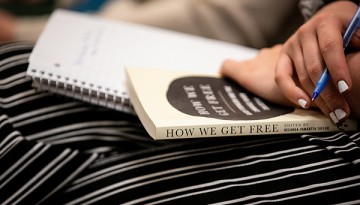
Shirley Samuels, professor of English, has received an $80,160 grant from the National Endowment for the Humanities for a two-week seminar in June 2019.

Summer research programs intrigue diverse students

Visiting students representing the next generation of physicists got a taste of life as a researcher during a pair of eight-week summer programs hosted by the Cornell Laboratory for Accelerator-based Sciences and Education.

How attitudes on race, immigration, gender will affect the 2018 midterm elections

An innovative study by Cornell researchers using three waves of surveys will show how voters’ views on immigration, race and gender influence the midterm elections in November and whether those attitudes shift leading up to the elections.

Joel Silbey, emeritus professor of history, dies at 84

Historian Joel H. Silbey, the President White Professor of History Emeritus and a member of the Cornell faculty since 1966, died Aug. 7.

On-demand polymers may yield designer materials

The lab of Brett Fors, assistant professor of chemistry and chemical biology, has proposed a novel technique for creating designer polymers on demand. 

For more cohesive police forces in war-torn countries, adding women may help

Adding women to security forces in war-torn countries could improve the cohesiveness of those forces, according to a new study by Sabrina Karim, a Cornell expert in gender and postconflict state-building.