A team led by Cornell professor Grace Xing has created gallium nitride power diodes capable of serving as building blocks for GaN switches, with many possible power and electronics applications.
In a landmark national election Jan. 16, Taiwan elected Tsai Ing-wen, LL.M. '80, its next president. The first woman and the second Cornellian to hold Taiwan's highest office, she will assume the presidency May 20.
“Black Lives Matter” is the theme of a community celebration of Martin Luther King Jr. Day Jan. 18 in Ithaca, and founders of the Black Lives Matter movement will come to Cornell Feb. 3 for the 2016 Martin Luther King Jr. Commemorative Lecture.
College of Arts and Sciences faculty and graduate students are invited to submit proposals to digitize Cornell collections by Jan. 31. more than two dozen faculty members place collections online.
A new program modeled on the Rhodes Scholarship will include three Cornellians among its 111-member inaugural class: Juliana Batista ’16, Atticus DeProspo ’15 and Andrew Schoen ’12. They were chosen among 3,000 applicants.
Edgar Rosenberg, a literary scholar and friction writer and professor emeritus of English and comparative literature at Cornell, Dec. 19 in Cayuga Heights, New York, at the age of 90.
Nearly half of the more than 900 January degree candidates took part in the Dec. 19 recognition ceremony, held before thousands of family and friends in Barton Hall.
Genes can be influenced by such environmental factors as population density, and cheating voles have more reproductive success when the population is high.
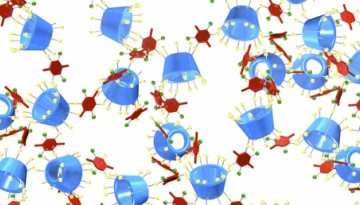
A team of Cornell researchers has used cyclodextrin, the same material found in the air freshener Febreze, to develop a technique that could revolutionize the water-purification industry.