An initiative to handle minor academic integrity violations in classes is rolling out to the entire university in the fall semester after a successful two-and-a-half-year pilot.
Artificial intelligence is aiding the search for better battery materials while using a creative approach to chemistry to expand the design space for electrolytes, unlocking new possibilities for safer, higher-performing energy storage.
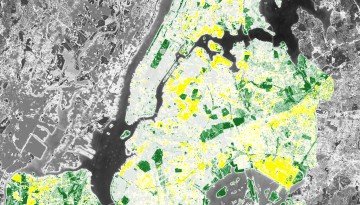
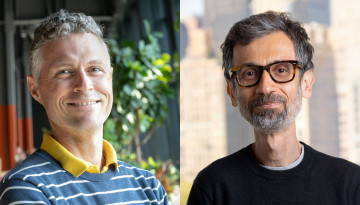
Announced Aug. 5 at Cornell Tech, a research partnership will help neighborhoods in Brooklyn, Queens and the Bronx identify where new trees are needed most to improve public health.
Researchers studying ribosomes, AI and quantum computing are among 13 early-career professors from Cornell who’ve recently been awarded National Science Foundation Faculty Early Career Development Awards.
A Cornell research group has devised a way to generate an image of multiple people, incorporating the poses of all individuals to inform the image generation and make the scene more believable and accurate.
LinkedIn and the Cornell Ann S. Bowers College of Computing and Information Science announce the fifth and final group of researchers to receive grants from their strategic partnership.
A new way to measure comorbidity can be used to accurately predict a patient’s risk of hospitalization and future healthcare costs across a population.