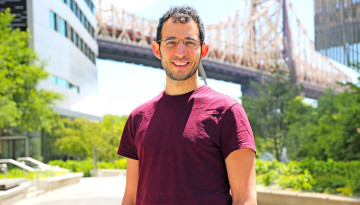
Makora, a startup founded by assistant professor Mohamed Abdelfattah, has received a $1.75 million award from the National Science Foundation-supported STRIDE Ventures AI Efficiency Challenge.
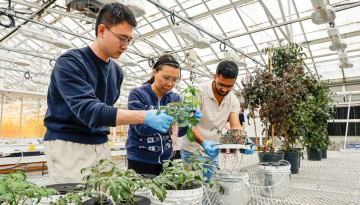
The Cornell-led multi-institutional Center for Research on Programmable Plant Systems will continue work to transform agriculture by enabling direct two-way communication with crop plants’ internal processes.
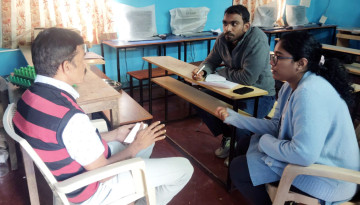
Overworked teachers in southern India have a new tool, developed by Cornell researchers, for educating their students: Shiksha Copilot, an AI system that generates culturally relevant lesson plans for schools with few resources.
As a Kluge Chair, Jackson is invited to conduct research using the collections at the Library of Congress and to interact with congressional members and staff.
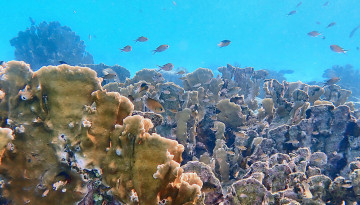
A doctoral student and a team of Cornell researchers and colleagues created WildFin, a data set composed of nine hours of video that they labeled frame-by-frame with fish behaviors.
Cornell researchers’ analysis of 1.5 million petitions on Change.org showed that AI writing assistance altered the wording of petitions, increasing their homogeneity and length, but did not improve petition outcomes.
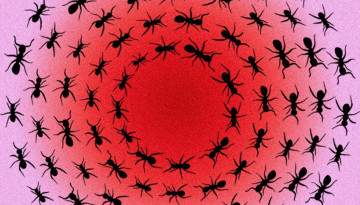
Study reveals how a few very general constraints can lead to echo chambers – self-reinforcing feedback loops – in biological systems such as birds in a flock, cells in tissue or ants in a swarm.
An innovative major in the College of Arts & Sciences is being expanded and refined to highlight its combination of science, social science and the humanities and its relevance to careers today.
New event asks the community to decrease technology use, increase face-to-face interaction and consider that every AI chat, doomscroll and text message has a water, energy and carbon footprint.