From exploring the mechanics of early-stage bone metastasis to analyzing price formation policies in wholesale electricity markets, Cornell Engineering’s Sprout Awards are funding unique research projects with the potential to grow partnerships across Cornell.
Cornell Atkinson’s annual Academic Venture Fund will provide nearly $1 million in seed funding to support research teams across five colleges and 11 departments, many with key external partnerships.
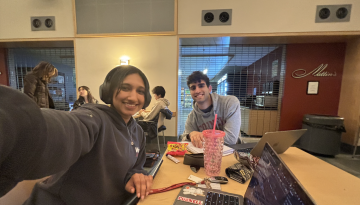
Nour Gajial ’26, left, and Yanni Kouloumbis ’26, founded MathGPT to help high school and college students struggling with math understand how to approach their problems step by step.
Cornell researchers have developed a bioelectric device that can detect and classify new variants of coronavirus, and potentially other viruses, such as measles and influenza, to identify those that are most harmful.
TeraPore Technologies, co-founded by Rachel Dorin, Ph.D. ’13, and its novel nanofiltration products are changing how the pharmaceutical industry is reducing risk of harmful virus contamination in biological drugs.
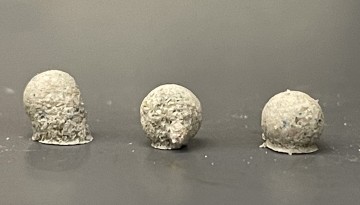
Andela Products, an upstate New York business, teamed up with Ryan Greene ’23, M.Eng. ’24, a student in materials science and engineering, to research how waste glass can be turned into an agricultural fertilizer.
The newest episode of a podcast hosted by Entrepreneurship at Cornell, Startup Cornell, features Andrea Ippolito ’06 MEng ‘07, CEO and founder of SimpliFed.
SimpliFed has launched and scaled a maternal health operating system,…
A motion simulator, collision avoidance system, and cybersecurity test for spacecraft are among the projects supported by inaugural grants from the Cornell-led New York Consortium for Space Technology Innovation and Development.
A gift establishing the Professor William Maxwell '56 Fellows will financially support research professors and students affiliated with Cornell's Engineering Innovations in Medicine initiative.