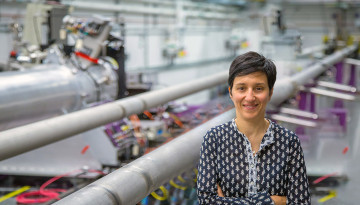
Carini, associate laboratory director for discovery technologies at Brookhaven National Laboratory, will take over from Joel Brock, who has been the director since 2013.
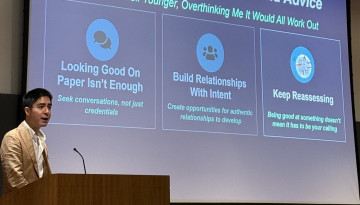
Jason Marvin, Ph.D. ’22, spoke about his journey from biomedical engineering doctorate to his current position during the Summer Success Symposium alumni keynote on Aug. 18.
Cornell engineers have developed a “digital twin” framework that creates a real-time virtual representation of urban carbon dioxide conditions, creating a tool that could help city planners monitor emissions, identify hotspots and evaluate potential interventions before implementing them in the real world.
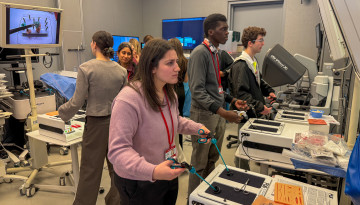
Inspired by the hands-on experiences that shaped their own careers, Beckie Robertson ’82 and Neil Robertson ’82 have endowed the Michael Shuler Clinical Immersion Program in Biomedical Engineering, ensuring future Cornell students gain firsthand exposure to patient care and clinical problem-solving.
Many New York City eighth-graders – particularly those from underserved communities – aren’t applying to academically competitive high schools where they could succeed, according to new Cornell research.
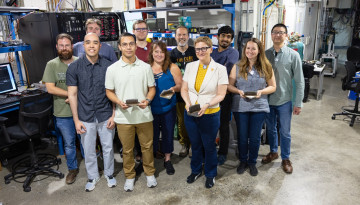
Researchers developed a method that uses krypton gas to slash the deposition temperature of the corrosion-resistant metal tantalum, resulting in thin films that have substantially higher electronic conductivity.
Six new faculty members will join Cornell Tech during the coming year, bringing expertise in AI, machine learning, programming languages, and operations research.