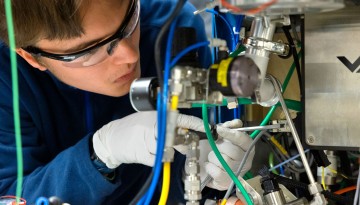
The Cornell Center for Materials Research (CCMR), in partnership with NYSTAR, is providing technical assistance and funding to help three NYS startups advance their technology.
Researchers developed a more controlled way of making nickelates, a material that could potentially help pinpoint the key qualities that enable high-temperature superconductivity.
With the appointment of an expert in engineering education, the Cornell NanoScale Science and Technology Facility brings strategic focus to preparing engineers and engineers-in-training for careers in nanoscience and microchip manufacturing.
A two-week program that introduces high school seniors to nanofabrication is one of many efforts at the Cornell NanoScale Facility to prepare a workforce - as the microchip industry settles in upstate New York.
For her steady and kind leadership Erin Mulrooney, associate dean for administration in Cornell Engineering, received the Employee Assembly’s 2023 George Peter Award for Dedicated Service.
A mathematician who has advised states and litigants on redistricting legislation will explore in a Feb. 5 lecture whether race-blind, computational approaches to law and policy can improve fairness.
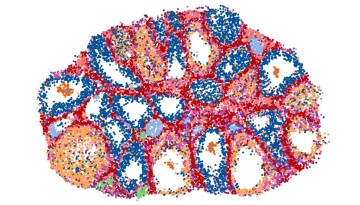
An interdisciplinary collaboration used a cutting-edge form of RNA tagging to map the gene expression that occurs during follicle maturation and ovulation in mice, an approach that could lead to therapeutic treatments for infertility.
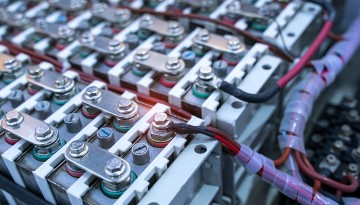
A team in Cornell Engineering created a new lithium battery that can charge in under five minutes – faster than any such battery on the market – while maintaining stable performance over extended cycles of charging and discharging.
A consortium organized by Cornell and four other New York-based leaders in semiconductor research and development has been awarded $40 million by the U.S. Department of Defense to advance microelectronics innovation and manufacturing.