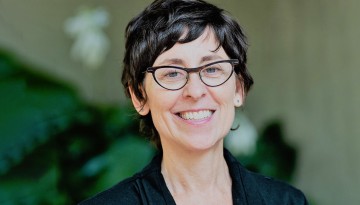
Maureen Waller, a professor in the Cornell Jeb E. Brooks School of Public Policy and the Department of Sociology, will study racial and economic disparities in driver’s license suspensions through her selection as Access to Justice Scholar. Waller will examine people’s lived experiences with having a suspended license as well as recent and potential reforms in New York to end “debt-based” suspensions.
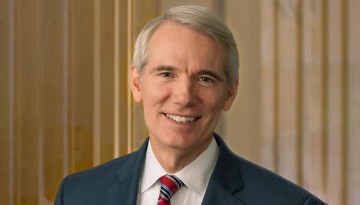
Former U.S. Senator Rob Portman will be one of the panelists at an event on Ukraine infrastructure reconstruction, held at the American Enterprise Institute in Washington, D.C. and sponsored by the Cornell Program in Infrastructure Policy at the Cornell Jeb E. Brooks School of Public Policy.
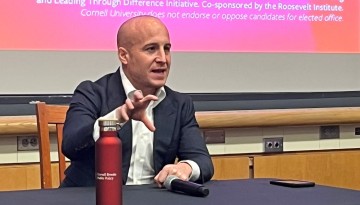
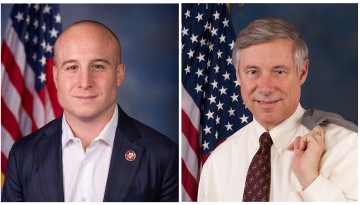
Max Rose, a former U.S. representative, was joined by former representative Fred Upton at a Jeb E. Brooks School of Public Policy event focusing on strategies for restoring civil discourse in the face of performative politics. Rose, a Democrat, and Upton, a Republican, said Congress has actually been relatively productive despite the degree of political polarization.
College students – who have the time and energy to serve as well as the desire to learn – are well positioned to advance their education while helping communities prepare for potential disasters, according to a new book co-edited by a Cornell researcher.
Employing AI to write full messages in an arena where personal correspondence is crucial – representative government – appears to be more effective than using AI to generate individual sentences, according to new Cornell research.
Millions of people in Myanmar have risen up against military rule since a coup d’état in February 2021 removed the country’s democratically elected leader from office — the topic of a March 27 panel discussion on “People in Revolt: The State of the Anti-Military Movement in Myanmar.”
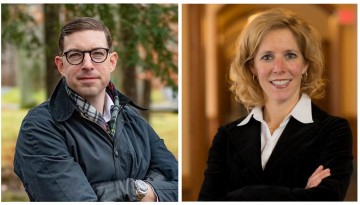
Paul Lushenko and Sarah Kreps are experts in military drone policy. In a newly published article, they have reviewed the arguments about the impact drones have on combat. They find a middle ground between those who say drones represent an evolutionary step in warfare hardware and those who contend drones will revolutionize conflict.
The program seeks to nurture the careers of Cornell’s most promising faculty members in the social sciences by providing time and space for high-impact social scientific scholarship.
Former members of Congress Max Rose and Fred Upton will discuss steps for countering political extremism and restoring civil discourse. Rose, a Democrat from New York, and Upton, a Republican from Michigan, will speak Tuesday, March 21 at an on-campus event open to all.