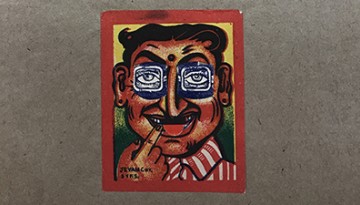
Cornell is celebrating the Bombay poets, who transformed English-language Indian poetry from flowery to gritty in the second half of the 20th century, with an exhibition and symposium.
Gerald Beasley, who became Cornell’s 12th Carl A. Kroch University Librarian Aug. 1, discusses his new post and the library's position within the university.
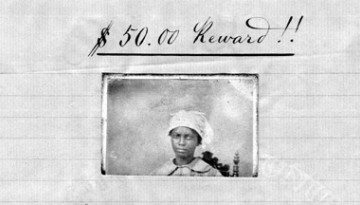
Freedom on the Move, a project being spearheaded at Cornell, has received a National Endowment for the Humanities grant to create a public database compiled from 100,000 runaway slave advertisements.
Mann Library is on the verge of selling its 100th Library in a Box, formally called The Essential Electronic Agricultural Library. The equivalent of an entire room's worth of print journals all compressed onto CDs provides some 2.2 million pages of academic articles to 100 institutions in 50 developing countries, from Vietnam, Bangladesh and Afghanistan to Senegal, Ethiopia and Malawi to Honduras, Bolivia and Peru.
Between the voter and the candidate stands the machine. The voting machine, that is. In a presidential race where every vote counts, how those votes are getting counted is the subject of increasing public scrutiny.
The National Endowment for the Humanities has awarded $618,857 to the Albert R. Mann Library at Cornell to preserve local and state agricultural literature on microfilm.
Exhibition of political Americana opens in Cornell's Kroch Library 'VOTE!' in time for 2000 election. The exhibition of campaign memorabilia from the Susan Havey Douglas Collection of Political Americana.