Cornell is a global leader in sustainability and climate change research, teaching and engagement. Our campuses are living laboratories for developing, testing and implementing solutions that address these most challenging issues.


$7.2M grant funds exploratory research into Earth Source Heat

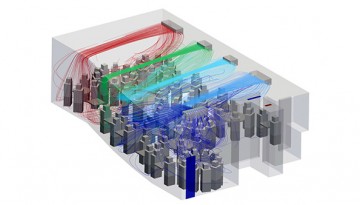
Cornell has secured a U.S. Department of Energy grant, expected to total about $7.2 million, which will fund exploratory research to help verify the feasibility of using a novel geothermal energy system to heat its campus buildings.

Baltimore, Bullock’s orioles will retain separate identities

The debate is over: According to scientists from the Cornell Lab of Ornithology, Bullock’s and Baltimore orioles will remain separate species, despite hybridization where their ranges meet in the Great Plains.

Report fosters ag industry climate-change tracking

Cornell’s Art DeGaetano is one of nine scientists to co-author a USDA report to help the nation’s farmers and commercial agricultural managers reduce risk in the face of climate change.

Benjamin Houlton named dean of Agriculture and Life Sciences

Benjamin Houlton, director of the John Muir Institute of the Environment and professor of global environmental studies at the University of California, Davis, has been named the Ronald P. Lynch Dean, effective Oct. 1.

Perovskite mineral supports solar-energy sustainability

When it comes to the future of solar energy cells, say farewell to silicon, and hello to calcium titanium oxide – the compound mineral better known as perovskite.

(Virtual) Things to Do, July 31-Aug. 21, 2020

Virtual events at Cornell include a lecture on challenges endangering freshwater fish, an conference on worker and community concerns in safely returning to work in New York City, an international linguistics meeting and an introduction to religious and spiritual life on campus.

Harry Greene and the rewilding of Rancho Cascabel

Herpetologist Harry Greene and evolutionary biologist Kelly Zamudio have an unexpected opportunity during the COVID-19 pandemic to “rewild” their newly purchased land in Texas, restoring its diverse, biological richness.

New soil models may ease atmospheric CO2, climate change

In Nature Geoscience, Cornell’s Johannes Lehmann says that scientists should develop new models that accurately reflect soil carbon-storage processes to draw down atmospheric carbon dioxide.

Small-farm tech reduces deforestation, climate change

Small farms in Zambia that use the latest hybrid seed for maize, help reduce deforestation and tackle climate change in a new Cornell study.