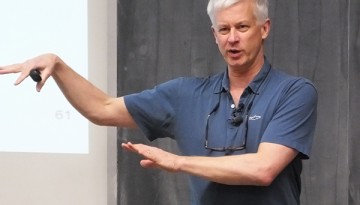
Artificial intelligence must be managed in ways that keep robots from doing harm accidentally, according to Daniel Weld, professor of computer science at the University of Washington.
Researchers are developing a system to enable teams of robots to share information as they move around and if necessary get help in interpreting what they see, enabling them to conduct surveillance as a single entity with many eyes.
April is Sustainability Month at Cornell, and the campus will bloom with exhibits, lectures, a bike rally, a fun run, environmental fashion and learning how to keep this blue planet green.
Max Zhang, associate professor of mechanical and aerospace engineering, is the winner of the second annual Engaged Scholar Prize, which recognizes community-based teaching, learning and research.
Students from 11 startup companies with products including organic skin care products and concussion detection devices pitched their ideas March 20, vying for the 2017 Student Business of the Year.
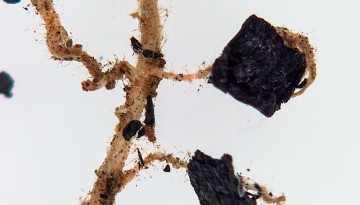
Cornell scientists have discovered a new high-definition system that allows electrons to travel through soil farther and more efficiently than previously thought, according to Nature Communication, March 31.
Members of Cornell's Senior Leaders Climate Action Group presented highlights of their report, 'Options for Achieving a Carbon Neutral Campus by 2035,' at a public meeting March 28 in downtown Ithaca.
Ten faculty-led projects are receiving approximately $170,000 in Internationalizing the Cornell Curriculum grants this year, the Office of the Vice Provost for International Affairs has announced.
A tunnel-boring machine that will repair New York City's Delaware Aqueduct has been named in honor of Nora Stanton Blatch Barney, Class of 1905, a suffragist civil engineer.