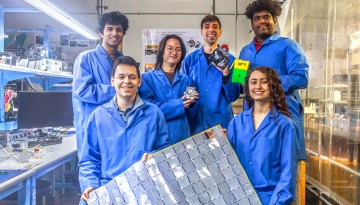
A light sail, which uses the momentum of sunlight to travel through space and could one day propel small spacecraft through interstellar realms, is headed to the International Space Station for testing on behalf of Cornell’s Space Systems Design Studio.
Cornell has joined a new Action Collaborative on Transforming Trajectories for Women of Color in Tech, launched by the National Academies of Sciences, Engineering, and Medicine along with 34 other institutions representing higher education, national laboratories and government.
In the Northeast, December temperatures helped to make 2023 the warmest year on record for 13 of the region’s 35 major urban areas, including New York City, says Cornell’s Northeast Regional Climate Center.
While more than 2 billion people in developing countries still cook with traditional fuels that yield greenhouse gas, a Cornell professor advised COP28 to support small-scale biogas.
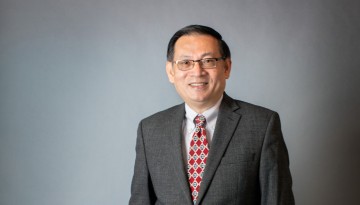
Shaoyi Jiang, Ph.D. ’93, the Robert Langer ’70 Family and Friends Professor in Cornell’s Meinig School of Biomedical Engineering, has been elected a fellow of the National Academy of Inventors for his pioneering work with zwitterionic materials.
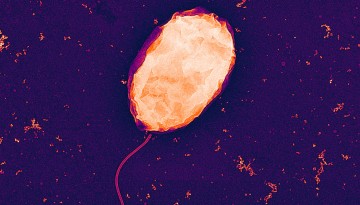
A hard-working bacterium may soon have a large influence on processing rare-earth elements that help run smartphones, electric cars and wind turbines in an eco-friendly way.
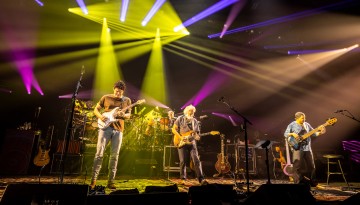
When Dead & Company came to Cornell in May for a benefit concert commemorating the Grateful Dead’s famed “Cornell ’77” show, it drew thousands to Barton Hall. The March announcement of the show was the most-viewed Chronicle story of 2023.
A piece of synthesizer history has been given an unexpected second life at Cornell, after eight months of meticulous and often confounding work by a group of synthesizer builders.
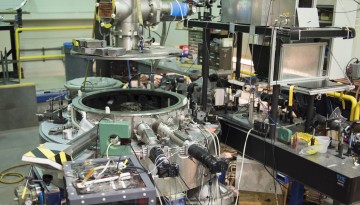
Cornell's Laboratory of Plasma Studies has joined the newly established Inertial Fusion Science and Technology Hub, known as RISE, a multi-institutional consortium to advance inertial fusion energy as a power source that could change the world.