Cornell's Student Multidisciplinary Applied Research Team was recognized for its impact on poor communities by earning the L.A. Potts Success Story award on Dec. 5.
The 2016 winners of the Mabati Cornell Kiswahili Prize for African Literature have been announced in fiction and poetry. Winners hail from Tanzania and Kenya.
On Nov. 29, Matthew Evangelista, the President White Professor of History and Political Science, delivered the lectio magistralis at the University of Roma Tre in Rome, Italy.
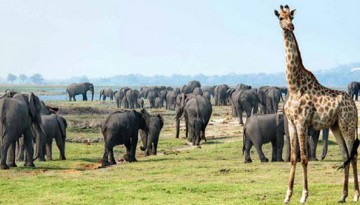
Animal and wildlife officials, and a College of Veterinary Medicine professor have developed policies to ensure safe trade of meat products while also aiding wildlife conservation.
The Mario Einaudi Center for International Studies has awarded four seed grants and four small grants to Cornell faculty members to support their international research.
New research by anthropologist Saida Hodzic challenges the idea that cutting is intractable and analyzes what happens when such a practice ends. Her focus is on Ghanaian anti-cutting activists.
Faculty are invited to submit proposals for 2017 Internationalizing the Cornell Curriculum Grants, the Office of the Vice Provost for International Affairs announced Dec. 2.