A new costume and textile exhibit at the College of Human Ecology examines how women’s bodies have been manipulated and shaped to fit fashionable silhouettes through history.
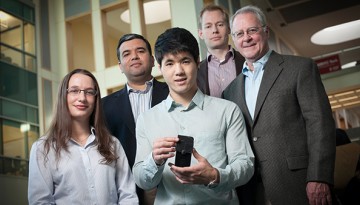
Cornell engineers and nutritionists have created a swift solution for a challenging global health problem: a low-cost, rapid test to detect iron and vitamin A deficiencies at the point of care.
People with disabilities in the study were nearly 44 percent more likely to be arrested by age 28, while those without had a lower probability of arrest, at 30 percent. This “disability penalty” was strongest for African-American men.
For Ary Bobrow ’99, director of the United National Office of Project Services in Anglophone West Africa – a portfolio that covers Gambia, Ghana, Liberia, Nigeria and Sierra Leone – his motivation has always been giving everyone an equal opportunity.
“Criminalizing Immigrants: Border Controls, Enforcement and Resistance,” Nov. 9-10, brought researchers and academics from a range of disciplines together.
Professors Saurabh Mehta and David Erickson, the co-founders of Cornell's Institute for Nutritional Sciences, Global Health and Technology (INSiGHT) discuss radical collaboration and using technology to solve global health problems.
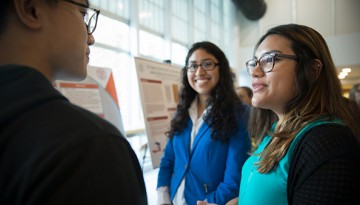
More than 40 student teams gave presentations based on their global and public health learning at the Cornell Global Health Program annual symposium Nov. 3.