A new decision model derived from business operations detects emerging wildlife disease months earlier, or with lower costs, than the current traditional strategies, according to a collaborative study from the College of Veterinary Medicine.
Cornell researchers have demonstrated that, by zapping a thin film with ultrafast pulses of low-frequency infrared light, they can cause its lattice to atomically expand and contract billions of times per second, potentially switching its electronic, magnetic or optical properties on and off.
Suzanne Mettler, Ph.D. ’94, and Trevor Brown, Ph.D. ’25, have co-authored a book detailing the growing political divide between rural and urban America.
There’s no place like home — and even when state-by-state income tax disparities make it profitable to move, high-wage earners seem to agree, according to new Cornell-led research.
Police Chief Anthony Bellamy, a member of the Cornell University Police Department for more than 21 years, including the last 3 ½ as chief, will retire from CUPD on Oct. 1 and join the Ithaca Police Department as a deputy chief.
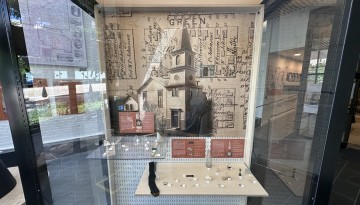
Open now through Dec. 31, the exhibit highlights findings from a four-year archaeological excavation of Ithaca’s St. James A.M.E. Zion Church conducted by Cornell faculty, students and Ithaca school children from 2021–2024.
Cornell will send its largest-ever delegation to Climate Week NYC 2025, to present on issues including the renewable energy transition, protecting public health from heat waves and addressing the impact of climate change on housing.
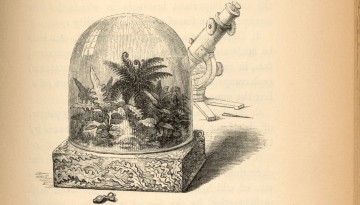
Plants – as objects of admiration and scientific study and materials for creative expression – are the focus of a new Cornell University Library exhibit, “Plant-Based: Botanical Innovations from Paper to Poison,” which opens Sept. 18.