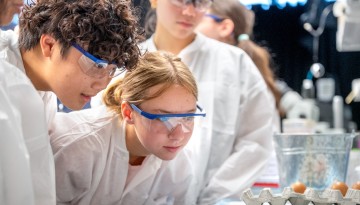
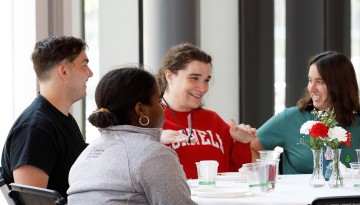
Cornell hosted more than 180 middle and high school students from across New York state for the annual 4-H Career Explorations Conference, held June 25-27.
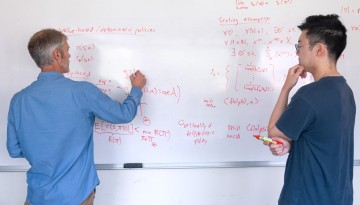
Cornell researchers have been building decision-support tools, optimization methods and artificial intelligence approaches to help the U.S. Navy and Marines quickly and effectively transport people and supplies – including blood for transfusions – in the event of an overseas conflict or humanitarian disaster.
On June 30, dairy industry leaders from New York state toured the Cornell University Ruminant Center, a one-of-a-kind testbed for new technologies and strategies and a crucial resource for the state's dairy farmers.
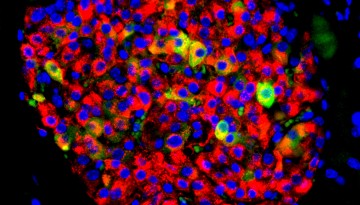
Eventual proof of a clear association between genes that express a salivary enzyme and Type 2 diabetes could lead to genetically testing people at birth to predict their susceptibility.
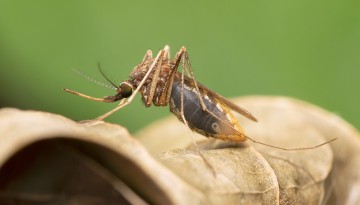
The threat of mosquito-borne diseases, which climate change is expected to exacerbate, highlights local politics’ pivotal and understudied role in public health.
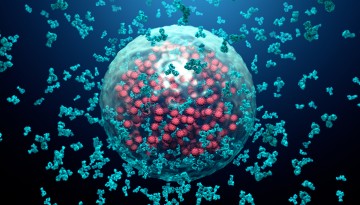
Cornell chemistry and chemical biology researchers have found a new and potentially more accurate way to see what proteins are doing inside living cells — using the cells’ own components as built-in sensors.
Cornell has received three grants from Interfaith America, a Chicago-based nonprofit that promotes bridge-building across religious and ideological divides.