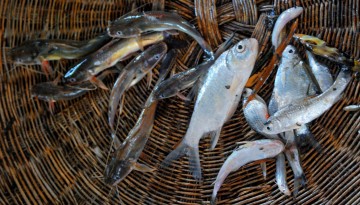
To satisfy the seafood needs of billions of people, offering them access to a more biodiverse array of fish creates opportunities to mix-and-match species to obtain better nutrition from smaller portions of fish.
Savely Senderovich, professor of Russian literature and medieval studies emeritus in the College of Arts and Sciences for more than 30 years, died on April 1 in Clarkstown, New York. He was 89.
For the five graduates who have earned Ph.D.s in public policy from the Brooks School in 2025, their academic journeys included COVID disruptions and a transition from the Department of Policy Analysis and Management to Brooks.
The Cornell Ann S. Bowers College of Computing and Information Science recognized the largest number of graduates in its history at three ceremonies held Commencement weekend.
U.S. Representative Beth Van Duyne ’95, R-Texas, will join Colleen Barry, dean of the Jeb E. Brooks School of Public Policy, for a timely discussion that will explore the intersection of public policy, politics and civic engagement.
Contrary to highly cited research from more than 30 years ago, an incentivized pay structure will lead to greater reliance on AI in decision-making than flat, fixed compensation, according to a study co-led by a Cornell researcher.