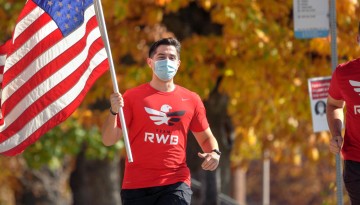
A new summer fund will help Cornell’s growing numbers of student veterans pursue unpaid summer internships – the latest in a long series of initiatives and programs aimed at creating a welcoming and supportive community for students who served in the U.S. Armed Forces.
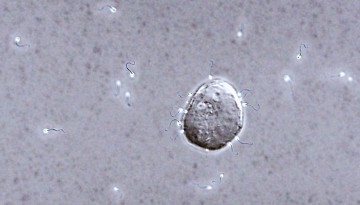
A new study by Cornell researchers reveals how sperm change their swimming patterns to navigate to the egg, shifting from a symmetrical motion that moves the sperm in a straight path to an asymmetrical one that promotes more circular swimming.
President Martha E. Pollack lauded faculty for recent honors, thanked donors for recent major gifts to Cornell and touted the university’s efforts on diversity and inclusion.
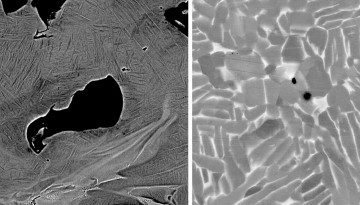
Cornell researchers found that by deliberately introducing more defects into a 3D-printed metal alloy, followed by a post-processing treatment, they could create a stronger, more ductile material.
JP Pollak, co-founder and chief architect at The Commons Project Foundation, which is working on a universal vaccine app, is the guest for the fifth episode of the Startup Cornell podcast.
A team of graduate students in food science, mechanical engineering and biological engineering is among the winners of Phase 1 of the NASA Deep Space Food Challenge.
Researchers at the Cornell University Center for Advanced Computing (CAC), Texas Tech University, and Indiana University are engaged in a $298,000 NSF-funded EAGER grant designed to optimize future cyberinfrastructure projects.
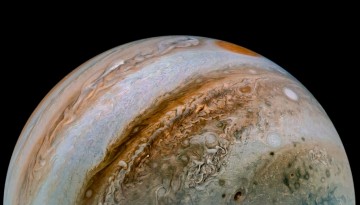
After gazing at Jupiter’s Great Red Spot and its cloudy realm, NASA’s Juno spacecraft has given humanity a 3D, turbulent sense of what lies far below its swirling surface.
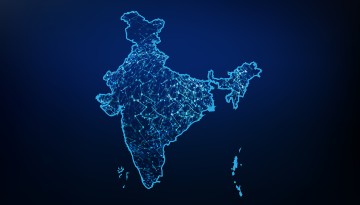
Ranjit Singh, Ph.D. ’20, and Steven Jackson, associate professor of information science in Cornell Bowers CIS, examined how India’s biometrics-based identification system, Aadhaar, works for the country’s nearly 1.4 billion people.