Cornell researchers will develop the first high-resolution carbon monitoring system for East Africa that combines “bottom up” ecological modeling with “top down” satellite data, thanks to a three-year, $1 million NASA grant.
Diversity is a major priority of the Cornell Ann S. Bowers College of Computing and Information Science, and three summer offerings – CSMore, SoNIC and the Designing Technology for Social Impact Workshop – demonstrate that commitment.
Mukoma Wa Ngugi, associate professor in the Department of Literatures in English, channeled his fascination with a traditional Ethiopian song called the Tizita into a new novel, “Unbury Our Dead With Song.”
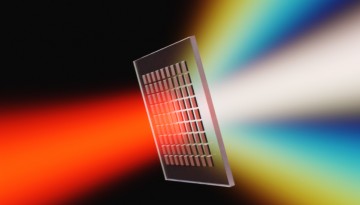
Cornell researchers have developed nanostructures that enable record-breaking conversion of laser pulses into high-harmonic generation, paving the way for new scientific tools for high-resolution imaging.
Personal protection against COVID-19 was the main reason given for vaccine acceptance among respondents in low- and middle-income countries, and concern about side effects was the most common reason for vaccine hesitancy.
The long wait for the delayed 2020 Olympics will finally end this week, and when it does Cornell will be represented by five alumni competing in five sports.
Coordination can be essential, but moral progress requires room for people to hold minority views, finds new research by Shaun Nichols, professor in the Sage School of Philosophy.
The genetic changes that underlie an especially lethal type of prostate cancer, called neuroendocrine prostate cancer, have been revealed in a new study at Weill Cornell Medicine. Learning more about what causes this type of cancer could lead to new approaches for treating it.
Cornell research has revealed a new form of bargaining power among Chinese platform-based food delivery workers, who conduct invisible ministrikes by logging out of apps and airing grievances over WeChat.