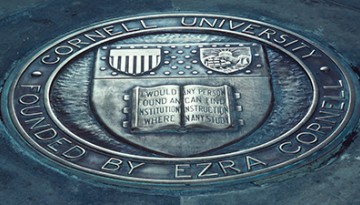
April 23, 2021 marks both the 90th birthday of Charles F. “Chuck” Feeney ’56 and the official unveiling of Feeney Way on Cornell’s Ithaca campus, honoring the man who has been called the university’s “third founder.”
The Spring 2021 Zalaznick Reading Series culminates with a reading by poet, memoirist, translator, and human rights advocate Carolyn Forché on Thursday, April 29.
CRP chair and associate professor Jeffrey Chusid, assistant professor of art Alexandro Segade, and associate professor of architecture Val Warke on how queer cultures occupy, redefine, and transform spaces ranging from personal to public.
Senior administrators sent a reminder that Wellness Days are set to begin April 23 to allow students an opportunity to rest and refocus and take time away from their academic responsibilities. The university will remain open during this break, but faculty and staff are encouraged to make time for self-care as well.
Graduates of the Creative Writing Program follow in the footsteps of the program’s Pulitzer Prize and National Book Award winners, best-selling authors and influential faculty.
To feed the world in a healthy, sustainable way, nations need to reorient today’s agri-food systems for distant generations, said Chris Barrett at an Earth Day forum.
The Discovery Kitchen, a state-of the-art teaching kitchen under construction in the North Campus Residential Expansion's dining facility, will bring together researchers and food service professionals to advance sustainable menus, dietary education and food literacy across campus.
On April 24, Cornell students can join this London-based artist at a virtual collage-making workshop and discussion about creativity, mental health, and representations of Black women in art.
Mario Herrero, a leading global expert in sustainable food systems, will join the College of Agriculture and Life Sciences (CALS) and become the university’s second Cornell Atkinson Scholar.