A novel way of studying binary black holes by identifying each of their individual component black holes by spins – rather than masses – leads to improved spin measurements.
Known for contributions that shaped the ILR School in its first decades, a gentle manner and long-running friendships with peers, Professor Emeritus Robert “Bob” Aronson died April 19 at age 104.
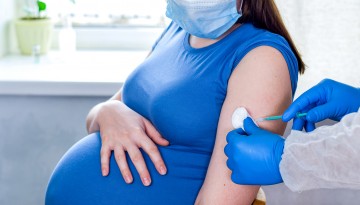
Women who receive COVID-19 mRNA vaccines produced by Pfizer-BioNTech or Moderna while in their third trimester of pregnancy generate a strong immune response and pass protective antibodies to their babies.
The archives of the Jewish Peoples Fraternal Order (JPFO), which flourished for two decades before the Cold War, are now housed at Cornell’s Kheel Center, Catherwood Library. Videos from a December 2020 conference focused on the archives are now available online.
Many Americans remain confused about when COVID-19 vaccines provide strong protection and the need for continued public health precautions, according to new Cornell research.
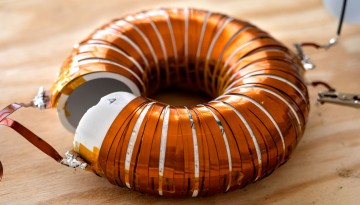
Cornell researchers are pioneering an innovative approach for the wireless charging of electric vehicles and other machines while they remain in motion.
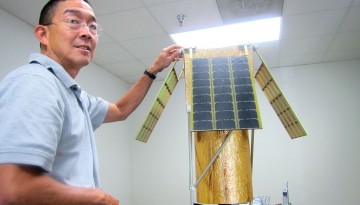
The endowment will be used for future investments in graduate fellowships, professorships and laboratory enhancements, with the ultimate goal of creating an institute for space technology, innovation and entrepreneurship.
About 650 members of the campus community – mostly students – received COVID-19 vaccines at an April 23 clinic in Bartels Hall, hosted in partnership with Cayuga Health System and the Tompkins County Health Department.