Lynden A. Archer, the James A. Friend Family Distinguished Professor in Engineering, has been named the Joseph Silbert Dean of Engineering for a five-year term beginning July 1.
According to Weill Cornell researchers, epidemiological models of COVID-19 should take into account the special dynamics of the coronavirus’s spread in nursing homes and other long-term care facilities.
New smart parking software developed by Cornell researchers could reduce congestion and emissions while saving drivers the time of circling to look for available spots.
Kavita Bala, professor and chair of computer science, has been named dean of the Faculty of Computing and Information Science, Provost Michael Kotlikoff announced June 5.
Dr. Lorin D. Warnick, Ph.D. ’94, the Austin O. Hooey Dean of Veterinary Medicine, has been appointed to a second five-year term, effective July 1, 2021.
Virtual events at Cornell include Virtual Reunion 2020, a Johnson Museum tour for 4-H students, a COVID-19 public policy discussion and a town hall featuring former Congressman Barney Frank and MSNBC anchor Stephanie Ruhle.
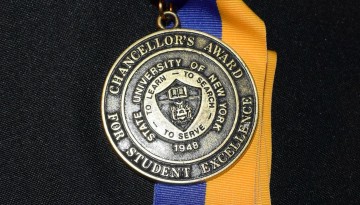
Sixteen faculty and professional staff members in state contract colleges at Cornell are receiving the 2019-20 State University of New York Chancellor’s Awards for Excellence.
A May 22 webinar tapped into Cornell’s expertise on the study of democracy, which is facing challenges all over the world and has been for a long time – long before the COVID-19 pandemic.
The creativity of Cornell undergraduates is on full display in their end-of-semester projects for the Myth and Religion in Mesopotamia course taught by Jonathan Tenney, assistant professor of Near Eastern studies.