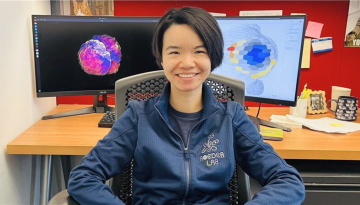
For research excellence into how living structures recover and preserve order in morphology amid constant disruption, postdoctoral scientist Lanxi Hu has been awarded the Weill Institute for Cell and Molecular Biology’s 2025 Sam and Nancy Fleming Research Fellowship.
REEgen, a Cornell spinout focused on rare earth element (REE) recovery, won the $150,000 grand prize at the 2025 FuzeHub Commercialization Competition, held at the New York State Innovation Summit on Oct. 29-30.
Chemotherapy activates a stress sensor in immune cells, which may help explain why many cancer patients experience debilitating pain as a side effect, according to Weill Cornell Medicine and Wake Forest University researchers.
New study suggests that teens who understand the changes caused by puberty will be more confident in handling those changes, a concept called pubertal self-efficacy.
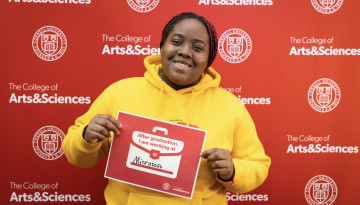
Students in tech fields now need to target specific organizations that match their interests, skills and values, and tailor their application materials to those specific organizations.