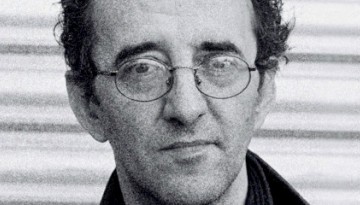
In “Framing Roberto Bolaño: Poetry, Fiction, Literary History, Politics,” Jonathan Monroe delivers one of the first full-length monographs devoted to the late Spanish-language author.
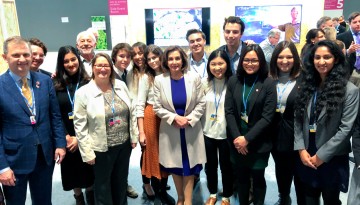
U.S. House Speaker Nancy Pelosi visited with Cornell students at the 25th annual United Nations’ Conference of the Parties climate change conference, Dec. 3 in Madrid, Spain.
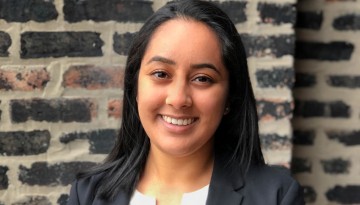
Medical student Nina Acharya ’19, one of 11 newly elected Rhodes Scholars from Canada, will go to Oxford University next fall to study children’s nutrition interventions in vulnerable communities.
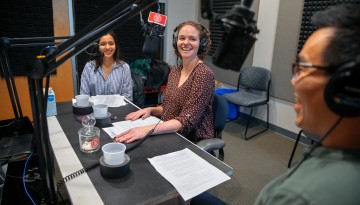
The Intergroup Dialogue Project has expanded its engagement with the Cornell community with workshops tailored to professional students and academic advisers, and a new podcast.
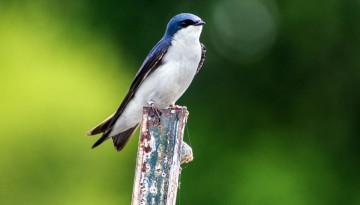
Cornell researchers have discovered a negative relationship between the temperature during tree swallows’ development and their hormonal response to stressors as adults. Specifically, they found that colder temperatures during the development stage had an effect on swallows later in life.
Researchers are using tiny sandwich structures of mirrors, called microcavities, to trap light and force it to interact with a layer of molecules, forming a new hybrid state that mixes light and matter. This process could lead to brighter, more efficient LEDs.
An Immunoprofiling Workshop – sponsored by the Cornell Center for Immunology, Dec. 13 in Stocking Hall – will feature technology experts who will provide case studies and best practices on various core technologies.