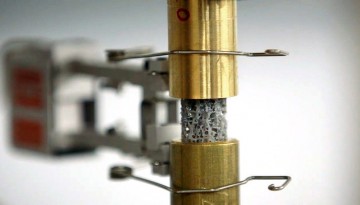
A team led by physics professors Itai Cohen and Paul McEuen is using the binding power of magnets to design self-assembling systems that potentially can be created in nanoscale form.
Events at Cornell include the 32nd annual Traditional Thanksgiving Feast; “Queen of Carthage,” an opera-oratorio by Ellie Cherry ’19; a lecture on birding and nature appreciation, and Mini Locally Grown Dance concerts.
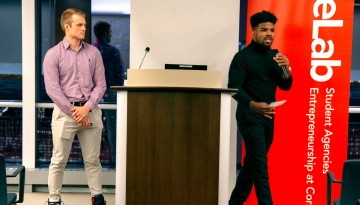
Members of eLab, Cornell’s student business accelerator, pitched their entrepreneurial ideas to business leaders, mentors and alumni at the annual eLab NYC Pitch Night, Nov. 7 at the World Trade Center.
A museum exhibit at Ithaca’s Paleontological Research Institution – created in collaboration with Cornell experts, illustrators and students – seeks to shine a light on the vast diversity of wild bees.
Cornell researchers have made a new discovery about how seemingly minor aspects of the internal structure of bone can be strengthened to withstand repeated wear and tear, a finding that could help treat patients suffering from osteoporosis and create durable, lightweight materials.
The ninth annual Cornell Town-Gown Awards, also known as the TOGOs, which highlight Cornell-community partnerships, will be held Dec. 7 from 9:30-11:30 a.m. in Ithaca High School’s Kulp Auditorium.
ILR students, staff and faculty and alumni will explore the theme Inequality and Work in 22 projects being funded by the ILR School through its annual research grant program.
New research from a team of Computing and Information Science scholars raises questions about hiring algorithms and the tech companies who develop and use them.