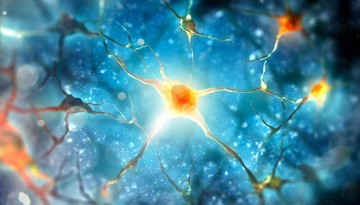
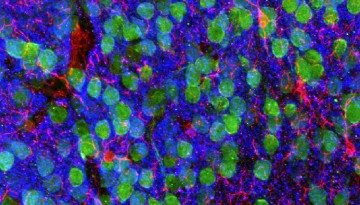
A high-salt diet may impair cognitive function by causing a deficiency of nitric oxide, which is vital for maintaining vascular health in the brain, according to a new study from Weill Cornell Medicine.
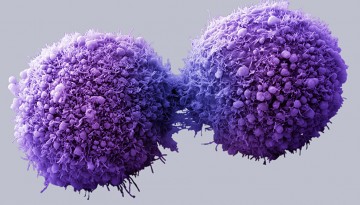
Powerful lab and computational techniques developed by scientists at Weill Cornell Medicine and two other centers will enable scientists to map tumors’ ability to develop resistance to drugs.
Cornell has launched a new Public History Initiative, led by Stephen Vider, as part of the provost’s Radical Collaboration initiative focused on the humanities and the arts.
A universal influenza vaccine developed with the potential to be longer lasting and more effective than commercially available vaccines is destined for human clinical trials, thanks to a $17.9 million grant from the National Institute of Allergy and Infectious Diseases.
With a grant of $2,355,000 over five years, Marcos Simoes-Costa, assistant professor of molecular biology and genetics, will investigate how the spatial complexity of an organism is generated in early development.
The Yang Tan Institute’s Kelly Clark and Thomas Golden used Faculty Fellows in Engaged Learning funding to develop a new course on law and theory related to employment for people with disabilities.
New cellular and molecular processes underlying communication between gut microbes and brain cells have been described for the first time by scientists at Weill Cornell Medicine and Cornell’s Ithaca campus.
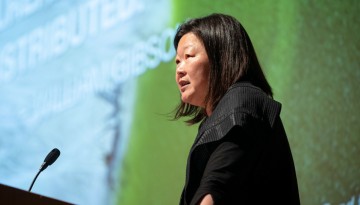
Dean of Architecture, Art and Planning J. Meejin Yoon, B.Arch. ’95, delivered a keynote address on the possibilities, applications and impacts of design Oct. 18 during Cornell’s Trustee-Council Annual Meeting.
The Department of Global Development will draw from faculty across the College of Agriculture and Life Sciences to create a unified development studies program.