Researchers from Boyce Thompson Institute have discovered a natural compound that causes soil roundworms to mature faster and die earlier, which could inform studies of human development and aging.
Computing and Information Science scholars combed through more than 1 million anonymized texts from nearly 3,500 crisis counselors to better understand how job experience affects counselor language use.
New research from Cornell’s Behavioral Analysis of Beginning Years Laboratory, led by associate professor of psychology Michael Goldstein, reveals that baby babbling elicits profound changes in adult speech.
The Office of Engagement Initiatives has awarded $1,307,580 in Engaged Curriculum Grants to 25 teams of faculty and community partners that are integrating community engagement into majors and minors across the university.
A new book by Cornell historian Lawrence Glickman traces how the term “free enterprise” evolved from a contested keyword in American politics to a cornerstone of conservative philosophy.
Hale Ann Tufan, adjunct assistant professor in CALS and a leading advocate for gender equality as a central tenet of crop improvement, has won the 2019 Borlaug Award for Field Research and Application.
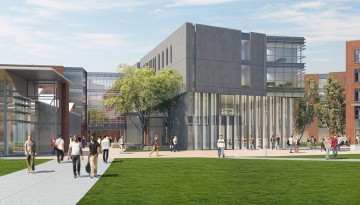
Cornell administrators and project leaders gave updates and took questions Aug. 15 on the university’s North Campus Residential Expansion, which received final site plan approval in late June.
The U.S. Office of Disability Employment Policy has awarded $2 million to ILR’s Yang-Tan Institute for the first year of a four-year, $8 million agreement to operate an employer-focused disability policy development center.