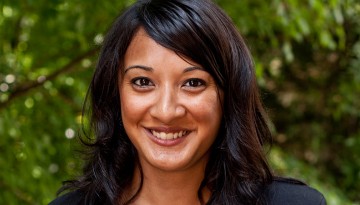
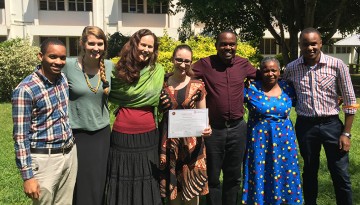
Sabrina Karim, assistant professor of government, has been awarded a grant to assess the barriers affecting women’s participation in military and police forces involved in peacekeeping missions.
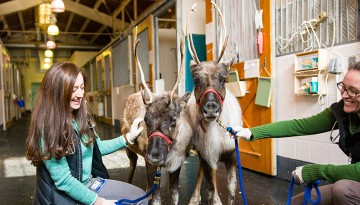
A year after a devastating illness brought reindeer Little Buddy to the Cornell University Equine and Nemo Farm Animal Hospital, the young reindeer is now back to full health and already embracing the holiday season.
The ILR School and the School of Hotel Administration have strengthened their partnership by establishing the Cornell Center for Innovative Hospitality Labor and Employment Relations, an equally shared initiative of the schools.
A slight modification to an existing RNA sequencing technique, developed in the lab of assistant professor Iwijn De Vlaminck, will allow a greater variety of molecules to be analyzed.
Faculty members Denise Green and Rachana Kamtekar have received support for preservation and research projects from the National Endowment for the Humanities.
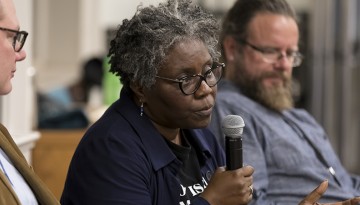
The study of the history of capitalism at Cornell is fueled by insightful, big-picture questions, many of which were raised during a Nov. 15 roundtable discussion.
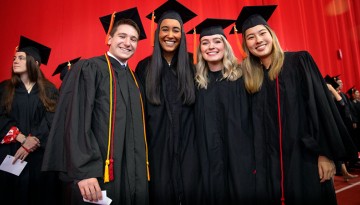
Around 470 graduates were honored at the Recognition Ceremony for 2018 December Graduates, held before an audience of 2,000 family members and friends on Dec. 15 at Barton Hall.
Jeanne Moseley, director of the Division of Nutritional Sciences’ Global Health Program, has been awarded the George D. Levy Faculty Award for her efforts to create exemplary, sustained community-engaged projects.