A new generation of effective weight loss drugs is now available in the U.S., but the drugs’ high cost highlights a reality hurting the nation’s economy and those who want to shed pounds: Obesity is expensive, and so are the treatments.
A Cornell research team identified barriers to immigrants’ use of online resources that could help them access health and legal benefits, and recommended solutions they incorporated into a new website, Rights for Health.
Casey Platkin ’26 advocated for a minimum wage increase in California’s San Mateo County, where thousands of low-wage workers will see bigger paychecks.
David Kimelberg, J.D. ’98, a member of the Seneca Nation, is helping Indigenous artists from around the world achieve recognition through his gallery in Buffalo, New York.
Cornell doctoral candidate Bethany Jorgensen co-authored the 2022 Lanzarote Declaration – a synthesized wish list of action in anticipation of a U.N. treaty on global plastic pollution in 2024.
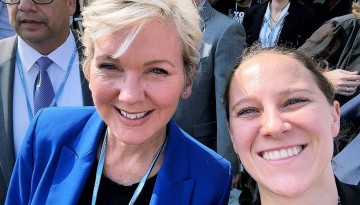
Courtney Schneider (r) took a selfie with U.S. Secretary of Energy Jennifer Granholm, one of many memorable moments at the United Nations Conference on Climate Change. Three students in the Cornell Jeb E. Brooks School of Public Policy participated in the conference, known as COP27.
This year’s 27 Global Public Voices fellows from the Einaudi Center will engage with national and international news media to make their voices heard on conditions and current events that threaten democratic institutions worldwide.
More than 300 faculty, staff and students from Cornell and the new Cornell Global Hubs gathered Nov. 16-17 to discuss ideas for the next universitywide Global Grand Challenge.
Holly and Sean Olson have established the Olson Family Strategic Initiatives Fund at the Cornell Jeb E. Brooks School of Public Policy to help create the world they want to live in.