Cornell researchers have developed a chemical tool to control inflammation that is activated by ultraviolet light, which will allow scientists to study inflammation and the immune system.
A Cornell-led team has devised a method for measuring the mechanical force cells exert on their surroundings, which can help scientists design better biomaterial scaffolds for tissue engineering.
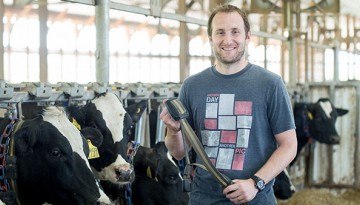
Collars with tags that carry an accelerometer – the same technology used in Fitbits for people – are effective non-invasive tools for tracking the health of dairy cows.
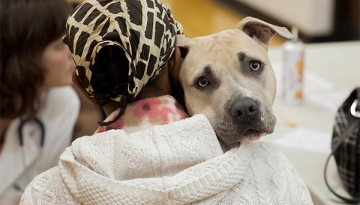
To help Southside Community Center/Cornell College of Veterinary Medicine Well Pet Clinic running into the future, a celebratory fundraiser featuring local artists will take place Nov. 15 at Ithaca's State Theatre.
The Office of Undergraduate Biology's Biology Scholars Program offers mentoring, study groups and guidance to biology majors from underrepresented groups.
A project led by Cornell researchers to better understand soil microbes and their role in the carbon cycle has received a three-year, $3.59 million grant from the U.S. Department of Energy.
Researchers provide unprecedented evidence that basal forebrain pathology precedes and predicts both entorhinal pathology and memory impairment in people with Alzheimer's disease.
Donald F. Smith, DVM, Austin O. Hooey Dean Emeritus of the Cornell University College of Veterinary Medicine, died Saturday, Oct. 29 following a serious illness. He was 66 years old.