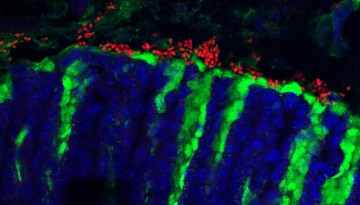
A preclinical trial has identified a way to thwart the highly addictive nature of opioids such as morphine and oxycodone while maintaining the drugs’ ability to relieve pain.
Inhibiting an immune signaling protein may help preserve the protective layer surrounding nerve fibers in the brain during both Alzheimer’s disease and ordinary aging, a new study suggests.
The installation designed by AAP's Jennifer Newsom and Tom Carruthers is one of nearly 200 artworks featured in the Metropolitan Museum of Art's "Flight into Egypt: Black Artists and Ancient Egypt, 1876-Now" exhibition, open through Feb. 17.
A fungus discovered in the mouse stomach may hold a key to fungal evolution within the gastrointestinal tract, according to new research led by Weill Cornell Medicine investigators.
The secret to cellular youth may depend on keeping the nucleolus – a condensed structure inside the nucleus of a cell – small, according to Weill Cornell Medicine investigators.
A novel combination of surgery and embolization used to treat subdural hematomas, bleeding between the brain and its protective membrane due to trauma, reduces the risk of follow-up surgeries, according to researchers at Weill Cornell Medicine and University at Buffalo.
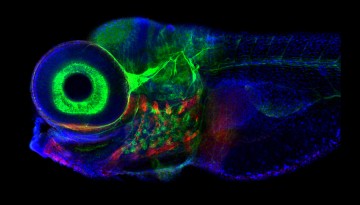
Working with week-old zebrafish larva, researchers at Weill Cornell Medicine and colleagues decoded how the connections formed by a network of neurons in the brainstem guide the fishes’ gaze.
Eclectic Convergence, a yearly event hosted by Entrepreneurship at Cornell, included featured speakers, networking, a pitch contest and tabling by student businesses.
A new study by Cornell information science researchers finds that ignoring race in college admissions leads to an admitted class that is much less diverse, but with similar academic credentials to those where affirmative action is factored in.