Two alums are leading an effort to give Rwandan farmers the tools to grow and sell grains - with the ultimate goal of lifting communities out of poverty and improving food security across East Africa.
Hospices are increasingly owned by private equity firms and publicly traded companies, but recently Weill Cornell Medicine researchers found that they performed substantially worse than hospices owned by not-for-profit agencies.
Weill Cornell Medicine and the Cornell Jeb E. Brooks School of Public Policy have established the Cornell Health Policy Center to serve as the locus for health policy impact, research and training across Cornell.
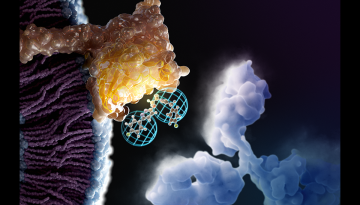
Weill Cornell Medicine researchers have determined the full-length structure and function of a blood pressure-regulating hormone receptor, which may enable better drug targeting of the receptor for diseases such as hypertension and heart failure.
Over 1,200 people from 49 countries convened at the inaugural “Global Climate Finance and Risks,” virtual conference co-hosted by Cornell Atkinson, the Cornell S.C. Johnson College of Business and the U.S. Treasury’s Office of Financial Research. This year’s U.N. COP29 in Baku will emphasize climate finance solutions.
The new “How NYC Moves” report, co-authored by a Cornell Tech expert and New York City’s Mayor’s Office, offers strategies to leverage technology to speed transportation analyses and unlock housing development.
A new analysis finds that Cornell Tech, its alumni and startups achieved $768 million in total economic impact in New York City in the 2023-24 fiscal year. That impact is expected to reach $1.5 billion by 2030.
A Cornell-led team will use a $2 million National Science Foundation grant to develop a “microbe-mineral atlas,” a catalog of microorganisms and how they interact with minerals, key for mining critical metals used for generating sustainable energy.
The process of identifying promising small molecule drug candidates that target cancer checkpoints may become faster and smarter through virtual screening, according to Weill Cornell Medicine researchers.