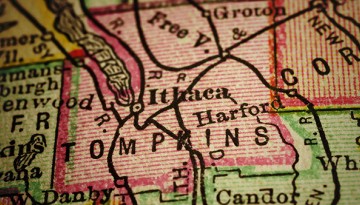
In a report for Tompkins County, the ILR School’s Ithaca Co-Lab recommends workforce strategies to reduce racial disparities, remove barriers to work and prioritize living-wage jobs.
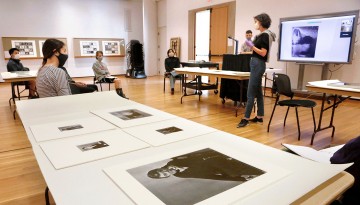
Gifts from retired banking executive Nancy Sukenik will boost the study and appreciation of photography at Cornell through the establishment of a curatorship at Cornell University Library, and a teaching gallery at the Johnson Museum of Art.
Research led by Corinna Loeckenhoff, professor of human development, is the first to show that a sense of increased time pressure caused by “social acceleration” may affect older adults who are no longer working.
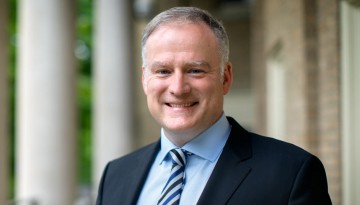
Professor John Cawley has been named the next director of the long-standing Cornell in Washington program, which will also move organizationally into the new Cornell Jeb E. Brooks School of Public Policy as he takes the helm July 1.
The funding will enable astronomy researchers at the North American Nanohertz Observatory for Gravitational Waves consortium to continue their search for five more years.
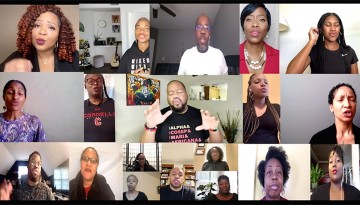
Cornell Reunion took place online, bringing together alumni from across the globe. Cornellians from six continents tuned in June 10-13, with alumni from Ithaca to the United Kingdom to Japan joining in the celebration.
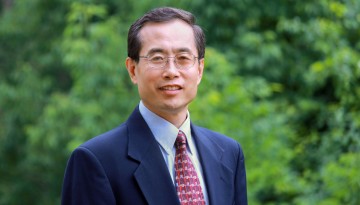
Zhao, professor of economics at Michigan State University, will begin his appointment as the David J. Nolan Dean of the Charles H. Dyson School of Applied Economics and Management on July 1.
Twenty faculty and professional staff members in four of Cornell’s state contract colleges have been selected for the 2020–21 State University of New York Chancellor’s Awards for Excellence.