The honor is presented annually, recognizing awardees on campuses across the SUNY system for their commitment to sustaining intellectual vibrancy, advancing the boundaries of knowledge, providing the highest quality of instruction and serving the public good.
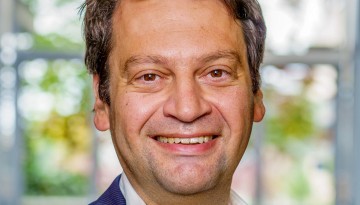
Sorin Lerner, professor and chair of the Department of Computer Science and Engineering at the University of California, San Diego, has been named dean of the Cornell Ann S. Bowers College of Computing and Information Science.
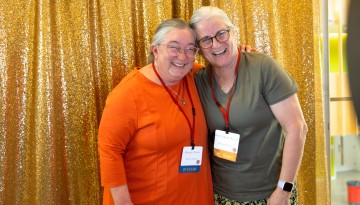
Staff members were honored at the 69th Annual Service Recognition Event, held June 2 in the Schurman Hall Atrium at the College of Veterinary Medicine.
Savely Senderovich, professor of Russian literature and medieval studies emeritus in the College of Arts and Sciences for more than 30 years, died on April 1 in Clarkstown, New York. He was 89.
More than 100 Mu Gamma sisters, from founding members to current undergrads, recently gathered in Ithaca to celebrate the chapter’s 50th anniversary, and a tradition of service, scholarship and sisterhood at Cornell.
U.S. Representative Beth Van Duyne ’95, R-Texas, will join Colleen Barry, dean of the Jeb E. Brooks School of Public Policy, for a timely discussion that will explore the intersection of public policy, politics and civic engagement.
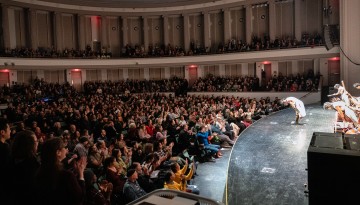
A $2 million gift from the Dallas Morse Coors Foundation for the Performing Arts will rename the Cornell Concert Series and allow it to continue its efforts to bring world-class musicians to campus.