When it comes to the U.S. elections, students are engaging with the ideas, conversing across difference and recognizing complexity - and are eager to vote, many for the first time.
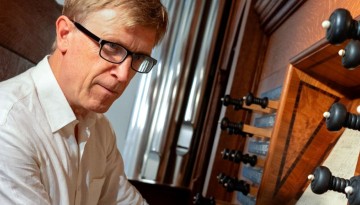
David Yearsley, the Herbert Gussman Professor of Music, has configured some of George Frideric Handel’s greatest works into pieces for solo organ in his new album.
Eleven teaching faculty from across the university have been awarded Cornell’s highest honors for graduate and undergraduate teaching, Interim President Michael I. Kotlikoff announced Oct. 22.
Professors Dr. Silvia Formenti and Dr. Massimo Loda have been elected to the National Academy of Medicine, in recognition of outstanding professional achievement and major contributions to the advancement of the medical sciences.
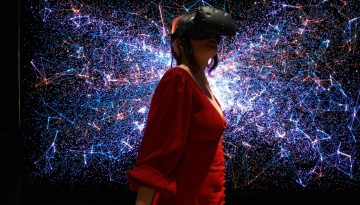
Students can win up to $1,500 for projects that combine art and technology in the inaugural Art + Tech exhibit hosted by The Milstein Program in Technology and Humanity.
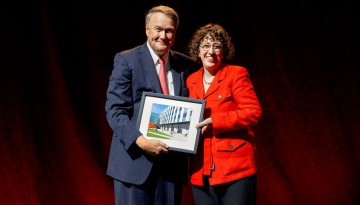
A plaza dedicated and named in honor of Cornell’s 14th president, Martha E. Pollack, will be part of the new Cornell Ann S. Bowers College of Computing and Information Science building and complex, connecting it with Gates Hall.
University leaders, core project donors and key stakeholders in Athletics and Physical Education celebrated the kickoff of the Meinig Fieldhouse project Oct. 19 with a groundbreaking ceremony as part of Cornell’s Trustee-Council Annual Meeting weekend.
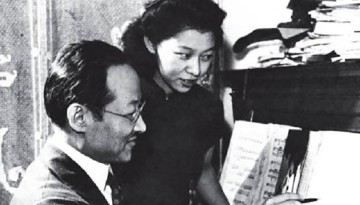
Chao Yuen-Ren 1914, composer of the first Chinese keyboard music, was also a ground-breaking linguist who transformed the Chinese language through his scholarship on Chinese grammar and phonology.