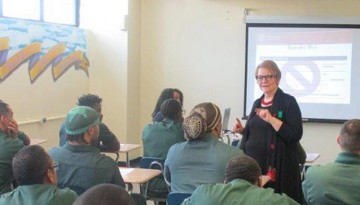
Every other Friday, individuals incarcerated at the Queensboro Correctional Facility take the Know Your Employment Rights course on employment rights taught by the ILR Labor and Employment Law Program.
Erie County officials shared initiatives focused on sustainability and economic growth, quality of life and building strong communities with faculty at a recent roundtable.
A year into Cornell’s Academic Integration Initiative, Gary Koretzky ’78 is relocating to Ithaca and taking on a new title to continue leading efforts to better promote, build and enhance collaborative research efforts across Cornell's campuses.
Recognition of the link between human and animal abuse has helped spur a slowly growing system for investigating and prosecuting crimes against animals. Cornell veterinary pathologists play a key role, performing necropsies and delivering expert testimony.
To see why Nate Chittenden ’00 was the perfect choice to receive the inaugural Cornell University Hometown Alumni Award, you had to look no further than the beaming community of family, neighbors and friends who came to honor him June 23 in Stuyvesant, New York.
Cornell Cooperative Extension is leading teacher workshops on how to use a giant traveling map that can give students a novel way to learn about New York state geography.