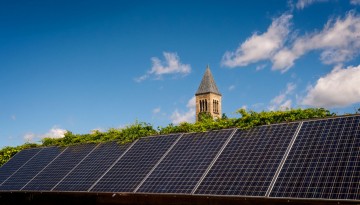
Cornell has earned a platinum sustainability rating – the top status – from an international group that tracks environmental stewardship for over 1,000 college campuses.
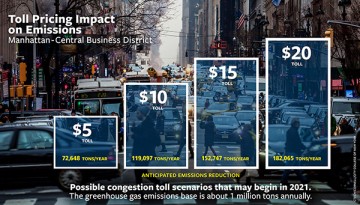
Cornell and the City College of New York research shows that by creating steep tolls for cars to enter Manhattan, traffic congestion and greenhouse gas emissions could be reduced.
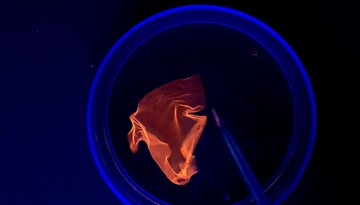
A Cornell-led collaboration is turning DNA from organic matter – such as onions, fish and algae – into biodegradable gels and plastics. The resulting materials could be used to create plastics and methods for drug delivery.
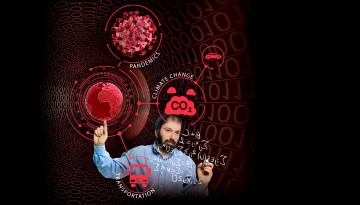
Cornell data scientists are developing models and mathematical techniques to address the world’s most vexing problems, from public health crises to climate change.
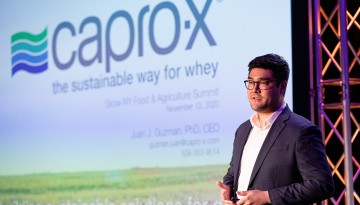
Capro-X, a startup that repurposes dairy waste and began in Cornell Engineering’s Commercialization Fellows program, has received a $724,000 National Science Foundation Phase II award.
Astronomer Lisa Kaltenegger told more than 1,300 online AAS registrants June 1 that searching for life in the universe provides insight for our own planet.
A group testing approach for COVID-19 proposed by a Cornell researcher could allow more than 90% of the country to safely return to daily life after a four-week period, a simulation showed.
A group led by Greg Fuchs has shown that quantum spin transitions can be driven solely by acoustic waves, a discovery that enables engineers to build smaller, more power-efficient acoustic sensors that can be packed more tightly on a single device.