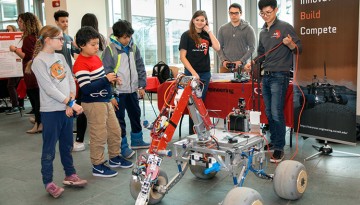
The 20th annual Bits on our Minds technology showcase brought together approximately 140 students and their cutting-edge projects, from a city bus tracking app to a robot that serves cocktails.
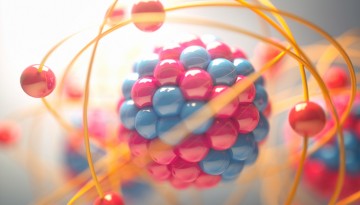
Applied physicists have demonstrated a technique for engineering key optical properties of diamond defects, providing a new tool to explore quantum mechanics.
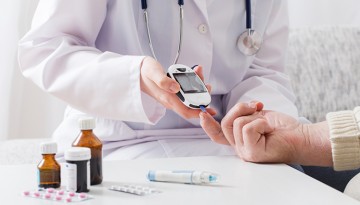
The lab of Minglin Ma, associate professor in the College of Agriculture and Life Sciences, will receive up to nearly $7 million from Novo Nordisk for research into a Type 1 diabetes implant device called NEED.
Twelve assistant professors from Cornell's Ithaca and New York City campuses have received five-year awards from the National Science Foundation's Faculty Early Career Development program.
The new season of the “What Makes Us Human?” podcast and essay series will showcase the newest thinking across academic disciplines about humans and the environment.
The Cornell NanoScale Science and Technology Facility has entered into a partnership with the Fraunhofer Institute for Photonics Microsystems, which will help small companies speed up their R&D process.
Cornell engineers have demonstrated a cost-effective way to stabilize lithium and sodium anodes using tin as a protective interface between the anode and a battery’s electrolytes.
A multi-campus study of lymphoma shows that certain cell mutations in tumors can cause the cancer to be resistant to chemotherapy, with biophysical forces such as fluid flow playing a key role.