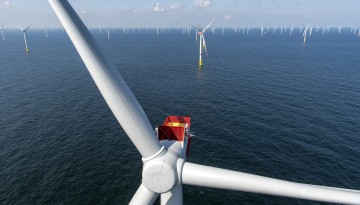
Cornell research shows how to make offshore wind farms more efficient in the face of impending rapid expansion, as the U.S. Department of the Interior plans leasing federal waters.
Cornell faculty members have until Monday, Dec. 6, to submit nominations of distinguished scholars in the areas of humanities and physical sciences for the A.D. White Professors-at-Large Program.
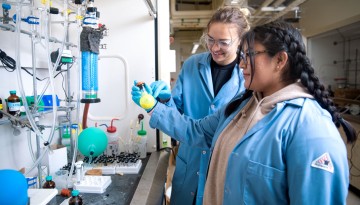
The Nexus Scholars program, funded by nearly $5 million in philanthropic support, will help undergraduates working on research projects with faculty members over the summer.
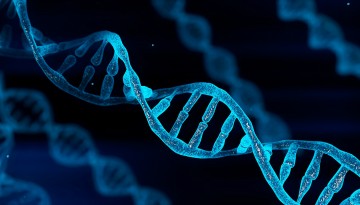
Cornell researchers used machine learning to predict with near-perfect accuracy how genes are transferred between bacteria, an approach that could potentially be used to stop the spread of antibiotic resistance.
Five Cornell mathematicians from the College of Arts and Sciences have been invited to speak at the world-renowned International Congress of Mathematicians (ICM) this year.
John A. Swanson ’61, M.Eng. ’63, noted innovator in the application of finite-element methods of engineering, was honored with the 2021 Cornell Engineering Distinguished Alumni Award on Oct. 14.
In the Fall 2021 Hans Bethe Lecture, physicist Andrew Strominger will describe the compelling progress made towards understanding black holes as well as future prospects for our understanding of black holes. The lecture will take place Oct. 27.
While some returning students left behind long days at the beach and summer barbeques, the student entrepreneurs in the 2021 cohort of the Kessler Fellows program returned having completed 10-week internships with startups around the nation.
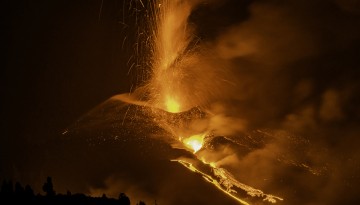
Associate professor Esteban Gazel and grad student Kyle Dayton will join a team of international researchers at the newly erupted Cumbre Vieja volcano in the Canary Islands.