Geophysicists examining glacier changes in the Russian Arctic have found that the rate of ice mass loss has nearly doubled over the last decade when compared to records from the previous 60 years.
Nine members of the Cornell University Sustainability Design student group spent Earth Day weekend at Smithsonian facilities in Washington, D.C., dispensing a green education to the public.
Faculty Spotlight: Kirstin Petersen: Engineering robot collectives that mimic social insects; Nicholas Klein: Transportation planning as social mobility; Hector Aguilar-Carreno: The microscopic fight against a deadly trojan horse and Ludmilla Aristilde: Transformative scientist.
Saloni Verma ’18, Kiyan Rajabi ’18 and Imani Majied ’19 will be delegates to the Clinton Global Initiatives University conference in Chicago in October.
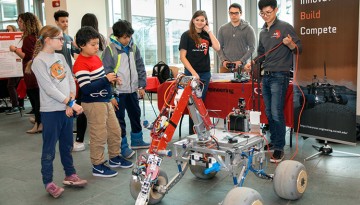
The 20th annual Bits on our Minds technology showcase brought together approximately 140 students and their cutting-edge projects, from a city bus tracking app to a robot that serves cocktails.
Applied physicists have demonstrated a technique for engineering key optical properties of diamond defects, providing a new tool to explore quantum mechanics.
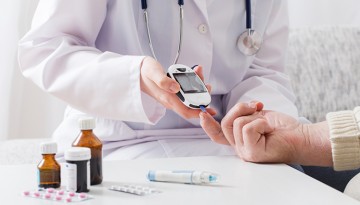
The lab of Minglin Ma, associate professor in the College of Agriculture and Life Sciences, will receive up to nearly $7 million from Novo Nordisk for research into a Type 1 diabetes implant device called NEED.
Twelve assistant professors from Cornell's Ithaca and New York City campuses have received five-year awards from the National Science Foundation's Faculty Early Career Development program.
The new season of the “What Makes Us Human?” podcast and essay series will showcase the newest thinking across academic disciplines about humans and the environment.