Researchers at Weill Cornell Medicine recently discovered that low levels of folate, a B vitamin essential for cell growth, can trigger specific genetic changes found in several human cancers, including lung tumors.
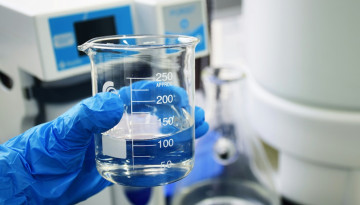
The new method, Semi-Local Density Fingerprints (SLDFs), can predict molecular properties with up to 100 times more accuracy than the current most popular method for modeling molecules and materials.
In a new book, Donald Campbell, Ph.D. ’71, professor emeritus of astronomy, recounts the history of Arecibo from construction to its last days under Cornell’s management in 2011.
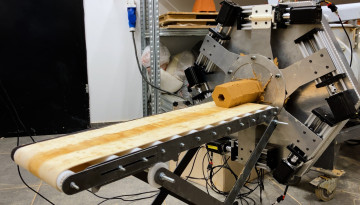
Researchers in Cornell’s Matter of Tech Lab have developed CeraPiper, a fabrication system that creates customized sizes and shapes of ceramic pipes that can be fitted together and filled with water for environmentally friendly evaporative cooling.
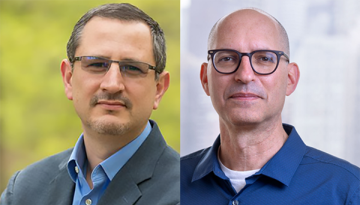
José F. Martínez, the Lee Teng-hui Professor in the School of Electrical and Computer Engineering at Cornell, and Mor Naaman, the Don and Mibs Follett Professor of Information Science at Cornell Tech, the Jacobs Technion…
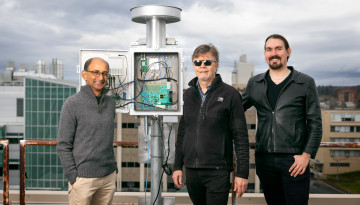
The Global Radio Explorer telescope is a series of eight terminals being built and tested at Cornell and the California Institute of Technology, and installed at locations around the world.
Contributions unveiled tools for analyzing environmental and health interventions, matching images to architectural plans, and generating realistic 3D scenes with unprecedented efficiency.
Cornell researchers tallied the environmental benefits of New York City’s congestion pricing program and found air pollution dropped by 22% in Manhattan, with additional declines across the city’s five boroughs and surrounding suburbs.