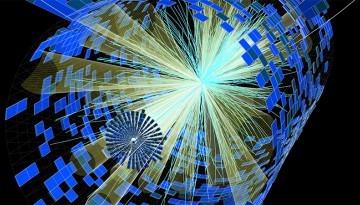
Physics professor Peter Wittich will lead a Cornell team that is part of an NSF-funded initiative aimed at expanding computation capacity for physics experiments at the Large Hadron Collider.
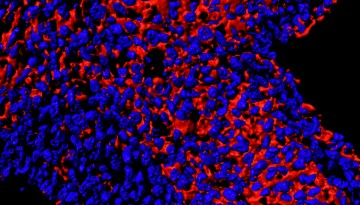
A previously ignored part of the intestine has turned into the key to its most crucial moment in embryonic development: the rotation that winds intestines.
A greenhouse gas may soon get a public relations makeover, as Cornell startup Dimensional Energy has developed a way to add sunlight to carbon dioxide to create an environmentally friendly fuel.
A growing number of international cities are taking more inclusive approaches for informal workers, such as home-based workers, street vendors and the self-employed, according to Cornell-led research.
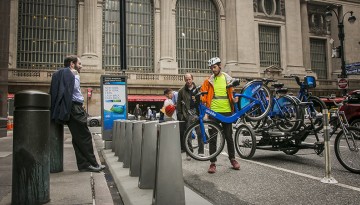
Cornell research has improved bike sharing in New York City, where a crowdsourcing system that makes real-time decisions helps make sure bikes are available when people need them.
Artificial intelligence is helping Cornell's Elephant Listening Project learn critical information about forest elephants faster, to better protect the endangered animals from poachers and other threats.
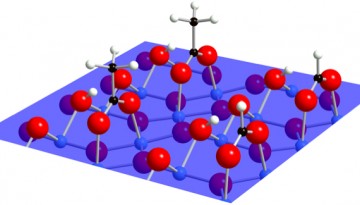
Melissa Hines, professor of chemistry and chemical biology, and research collaborators in Vienna, Austria, have begun to explain the unique self-cleaning ability of titanium dioxide.