Official statistics on use of deadly force by police resulting in death underreport the reality; a new study finds much higher rates of police homicide that varies by region.
A new study from Cornell researchers finds domestic abusers can choose from thousands of apps to spy on their partners, from traditional spyware to software intended for legitimate purposes, like finding phones.
Humans have a cognitive bias toward earning, which makes us unconsciously spend more brain power on earning than on saving, according to a new Cornell study.
The Atkinson Center for a Sustainable Future’s Academic Venture Fund has awarded $1.5 million to a range of projects that will provide sustainable solutions around the world, from the Finger Lakes to the Pamir Mountains in Central Asia.
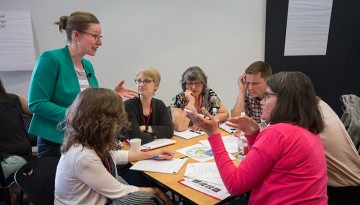
Thirty-three researchers from across the globe visited the Bronfenbrenner Center for Translational Research last month to learn how to conduct research through community partnerships that will inform real-world practices and decisions.
More than 500 middle and high school students from across New York gathered at Cornell’s Ithaca campus June 26-28 to participate in workshops taught by Cornell faculty, staff and graduate students during the annual 4-H Career Explorations conference.
In a new Cornell study, psychologists found that participants were more likely to call male professionals – even fictional ones – by their last name only, compared to female professionals, an example of gender bias that may be contributing to inequality.
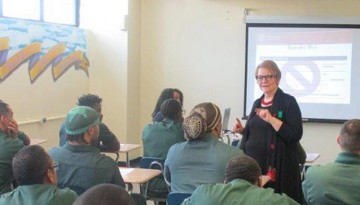
Every other Friday, individuals incarcerated at the Queensboro Correctional Facility take the Know Your Employment Rights course on employment rights taught by the ILR Labor and Employment Law Program.