COVID-19 community surveillance project launches

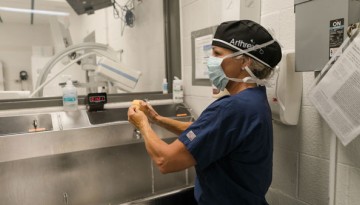
Researchers at the College of Veterinary Medicine, in collaboration with the Tompkins County Health Department and Cayuga Health System, are conducting a COVID-19 community health survey to estimate levels of COVID infection and immunity in the county.

Around Cornell

New well-being program director sets sights on increased programming, resources for veterinary college community

On February 16, Kate Buckley ’01 will join the Cornell University College of Veterinary Medicine as the community’s well-being program director.

Around Cornell

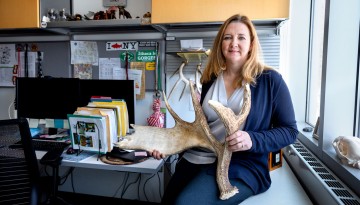
From bats to bears, program protects NYS wildlife from disease

The New York State Wildlife Health Program mobilizes experts when disease strikes wild animals and prevents outbreaks by translating data into policy.

Seven faculty members elected AAAS fellows

Seven Cornell faculty members have been elected fellows of the American Association for the Advancement of Science, the world’s largest general scientific society. This year's fellows, 564 in all, will be honored at a virtual event Feb. 19.

Staff News

A Q&A with Dr. Katharyn Mitchell of the veterinary college

Mitchell recently joined the College of Veterinary Medicine as assistant professor in the section of large animal internal medicine.

Around Cornell

Veterinary surgeon-scientist shifts from Cornell to AVMA

Lisa Fortier, Ph.D. ’98, the James Law Professor of Surgery at the College of Veterinary Medicine, has devoted her career to developing cutting-edge treatments that can dramatically improve both horses’ and humans’ lives.

Around Cornell

Diane Bailey to head Cornell Institute for Digital Agriculture

Diane Bailey, the Geri Gay Professor of Communication, has been named director of the Cornell Institute for Digital Agriculture.

Around Cornell

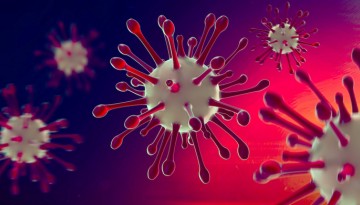
COVID variant siblings show different levels of virulence

As the world enters a third year of pandemic-related uncertainties, one thing does seem certain: The SARS-CoV-2 virus mutates and keeps us on our toes.

Bald eagle rebound stunted by poisoning from lead ammunition

A new study finds that despite increasing numbers of bald eagles, poisoning from eating dead carcasses or parts contaminated by lead shot has reduced population growth by 4% to 6% annually in the Northeast.