Scientists at the Cornell University College of Veterinary Medicine analyzed four different antimicrobial measurement methods used across the globe in the hopes of steering governing groups toward a more unified monitoring system.
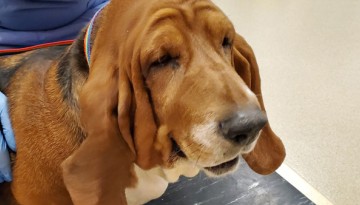
The folds in a basset hound’s face are a hallmark of the breed’s droopy charm, but for six-year-old dog Daisy, an allergic reaction changed those folds from adorable to painful.
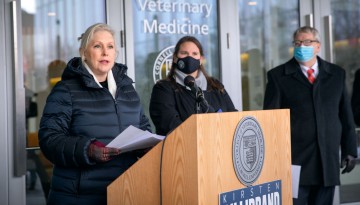
U.S. Sen. Kirsten Gillibrand (D-New York) visited the College of Veterinary Medicine on Jan. 7 to discuss bipartisan legislation proposing to establish centers of excellence for pandemic response and prevention.
From teaching food science at the Ithaca Farmers Market to researching how youth feel about their race and ethnicity, this year’s Engaged Faculty Fellows are demonstrating the range of work that’s possible through community-engaged learning and research. The 2021-22 cohorts include 15 faculty from eight Cornell schools and colleges.
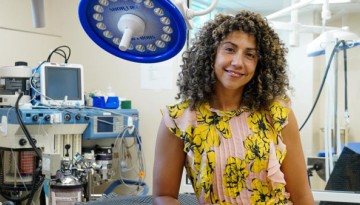
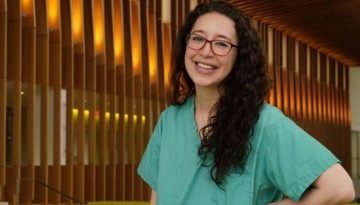
The Cornell University College of Veterinary Medicine has recently welcomed many new faculty members to its academic departments, each one bringing a unique set of skills and experience that enriches the college.
The Cornell University College of Veterinary Medicine has recently welcomed many new faculty members to its academic departments, each one bringing a unique set of skills and experience that enriches the college.
The hospital has seen tremendous growth since opening in 2011. At the time, it had nine doctors among 36 staff. Today, it has 25 doctors among 125 staff, and in the last fiscal year alone, the hospital logged over 25,000 patient visits.
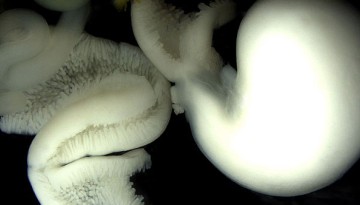
Research from the Kurpios lab reveals the complex signaling that directs formation of intestinal lacteals, the lymphatic channels required for fat absorption in vertebrates.