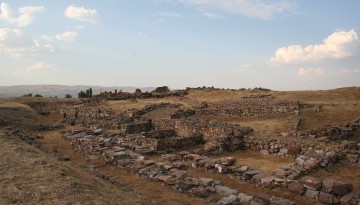
Dendrochronology research by professor Sturt Manning has established a secure timeline for the archaeological and historical chronology of Mesopotamia in the second millennium B.C.
Cornell’s global reach expands with the inaugural session of the East China Normal University (ECNU)/Cornell University Summer School in Theory (ECSST), July 18-22 in Shanghai.
Gilbert Stoewsand, a Cornell food scientist who helped to rescue New York's fledgling wine industry in the early 1970s by debunking shoddy science that attributed health risks wine made from hybrid grapes, died July 4. He was 83.
Rodney Dietert, Cornell professor of immunotoxicology, has penned a new book that calls for a new paradigm in how we view public health and human biology.
The key to curing multiple sclerosis may well lie in the mysterious signaling of lipids, a major component of cells, says Cornell chemist Jeremy Baskin.
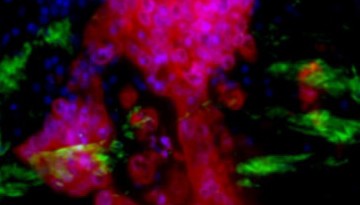
Cornell researchers have helped develop a recellularized human colon model that could be used to track the pathogenesis of colon cancer and possibly gain insight into its spread to other organs.
According to the Global Information Technology Report 2016, co-authored by Dean Soumitra Dutta, seven countries are excelling at reaping economic benefits from investments in information and communications technologies.
The grant, awarded to four New York City medical centers, including Weill Cornell Medicine, aims to improve physicians' ability to prevent and treat disease based on individual differences in lifestyle, environment and genetics.
Three pairs of early career scientists have been named the inaugural Mong Family Foundation Fellows in Neurotech. They will work jointly under the mentorship of faculty across Cornell to advance brain technologies.
Cornell will host the Conference in Laboratory Phonology, an international meeting for researchers taking experimental approaches to the study of human speech sounds, July 13-17. It will addresses sounds in human language as part of a linguistic, cognitive and communicative system.
Single-strand DNA sequencing method used for analyzing ancient remains applied by Cornell researchers to sequencing of cell-free DNA taken from plasma of transplant patients, resulting in greater yield of ultrashort cfDNA.