Using data from “Shark Tank,” economist Sharon Poczter found that women entrepreneurs got about half as much funding for their startups as men – but only because they asked for less. The takeaway? Ask and you shall receive.
Nurturing creativity in science will be explored on July 25 by leading scientists, including two Nobel Prize winners, at the Creativity Spark: a creativity workshop for scientists.
Immobilizing negatively charged ions in the polymer-like separators of rechargeable lithium batteries is shown to result in stable electrodeposition, even at relatively high current densities.
Dendrochronology research by professor Sturt Manning has established a secure timeline for the archaeological and historical chronology of Mesopotamia in the second millennium B.C.
Cornell’s global reach expands with the inaugural session of the East China Normal University (ECNU)/Cornell University Summer School in Theory (ECSST), July 18-22 in Shanghai.
Gilbert Stoewsand, a Cornell food scientist who helped to rescue New York's fledgling wine industry in the early 1970s by debunking shoddy science that attributed health risks wine made from hybrid grapes, died July 4. He was 83.
Rodney Dietert, Cornell professor of immunotoxicology, has penned a new book that calls for a new paradigm in how we view public health and human biology.
The key to curing multiple sclerosis may well lie in the mysterious signaling of lipids, a major component of cells, says Cornell chemist Jeremy Baskin.
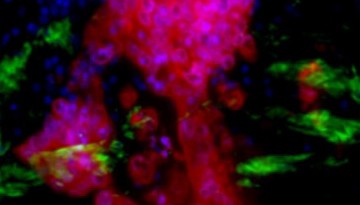
Cornell researchers have helped develop a recellularized human colon model that could be used to track the pathogenesis of colon cancer and possibly gain insight into its spread to other organs.
According to the Global Information Technology Report 2016, co-authored by Dean Soumitra Dutta, seven countries are excelling at reaping economic benefits from investments in information and communications technologies.
The grant, awarded to four New York City medical centers, including Weill Cornell Medicine, aims to improve physicians' ability to prevent and treat disease based on individual differences in lifestyle, environment and genetics.