Taking lessons from Germany and Norway, Professor Virginia Doellgast demonstrates how different tactics can be used to protect workers from algorithmic management and AI technology abuses.
Cornell experts have launched the Aging and Climate Change Clearinghouse to promote research, policies and activism addressing the need to protect vulnerable older adults in the face of climate challenges.
Cornell is spearheading the New York Consortium for Space Technology Innovation and Development – a new initiative aimed at bolstering U.S. space technology research and manufacturing by uniting industry, academic and government partners.
Novelist and short-story writer Manuel Muñoz, M.F.A. ’98, has been awarded a $800,000 “genius grant” from the John D. and Catherine T. MacArthur Foundation.
The 18 students in the College of Engineering's Kessler Fellows program recently completed funded summer internships at a startup of their choice. Four interns went into depth about their experiences.
Four Cornell-funded projects are expanding efforts to preserve and highlight the Gayogohó:nǫˀ (Cayuga Nation) language and culture, in western New York and throughout the country.
Neuroscientist Antonio Fernandez-Ruiz has received a New Innovator Director’s Award from the National Institutes of Health’s High-Risk, High-Reward Research program.
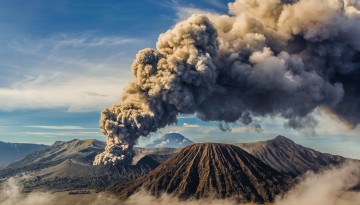
To bridge the data gap between volcanologists and atmospheric scientists, Cornell researchers have depicted volcanic ash samples to learn how this tiny dust plays a big climate role.
Glaciers could become a powerful tool for monitoring some volcanoes, according to new Cornell research that shows for the first time how the altitude of glaciers could signal the threat of an eruption.
A survey of New York state residents by College of Veterinary Medicine researchers found that nearly half of respondents increased the amount of time they spent on wild and backyard food and related activities early in the pandemic.