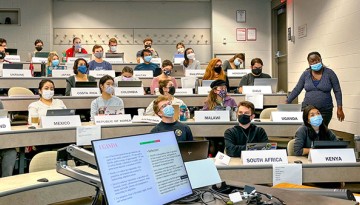
During the COP26 climate change conference, 45 Cornell undergraduate and graduate students plugged in from Ithaca to hear international negotiations first-hand and environmental history.
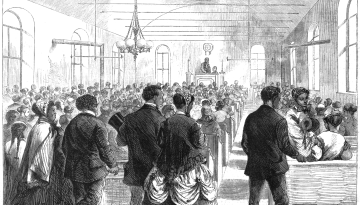
Derrick Spires will talk about “Defining Democracy: How Black Print Culture Shaped America, Then and Now” Dec. 1 in a Society for the Humanities webcast hosted by eCornell.
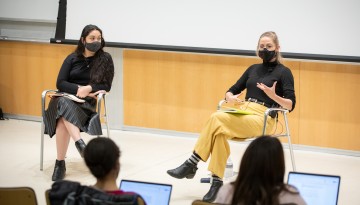
Molly O’Toole '09, the Zubrow Distinguished Visiting Journalist Fellow in the College of Arts & Sciences this semester, shared career advice, political insights and anecdotes from her work and life during two recent talks.
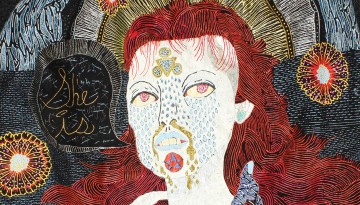
A new book, “Trans Historical: Gender Plurality before the Modern,” co-edited by a Cornell professor, explores what gender might have been before modern medicine, the anatomical sciences and the modern division of gender difference into a binary form.
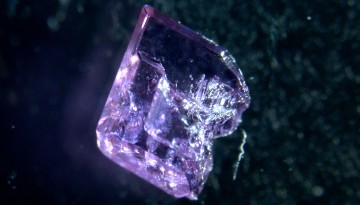
An engineered bacteria may solve challenges of extracting rare earth elements from ore, which are vital for modern life but refining them is costly, environmentally harmful and mostly occurs abroad.
From public health to voting rights, Cornell in Washington students are working on timely national issues this semester through internships at federal agencies including the CDC and Justice Department.
Senior Lassan Bagayoko was recently awarded $5,000 through Cornell’s Janet McKinley '74 Family Grant to provide an online college prep program for high school students in underprivileged communities.
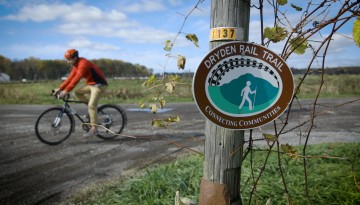
With support from Cornell, the Dryden Rail Trail is a step closer to connecting Ithaca and several nearby communities with a corridor that enables off-street commuting and expands access to natural areas.
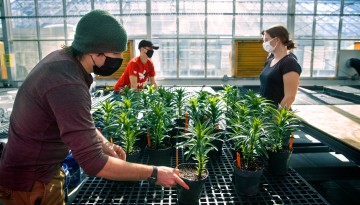
The gift from the estate of late professor Raymond Fox ’47, M.S. ’52, Ph.D. ’56, will support scholarships and fellowships as well as student participation in supplemental educational programs for undergraduate plant science students.
Employees who had more training and development were less likely to be laid off when their companies faced pandemic-related financial hardship, according to new ILR School research.
Intensive, annual library programs empower students, strengthening their core research skills while providing advanced tools and methods for scholarship. These immersion programs are offered for graduate students in a range of disciplines.