The Cornell Veterinary Biobank has received a $2.5 million federal grant to process, store and distribute biological samples for the Dog Aging Project, a massive national effort to study aging in dogs – and humans.
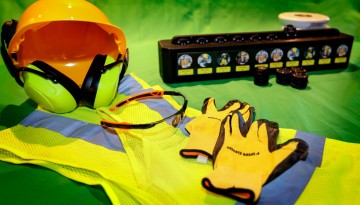
A Cornell-based startup has shifted its platform’s technology in response to the pandemic, ensuring social distancing in the workplace and enabling companies to bring employees back to work safely.
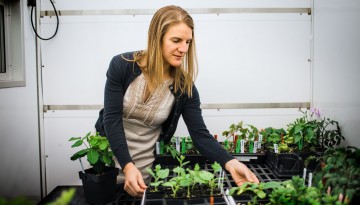
The National Science Foundation recently awarded Margaret Frank, assistant professor of plant biology, a $1.3 million Faculty Early Career Development Program grant for her study of mRNA communication in plants.
In a new paper, Cornell Tech researchers identified a problem that holds the key to whether all encryption can be broken – as well as a surprising connection to a mathematical concept that aims to define and measure randomness.
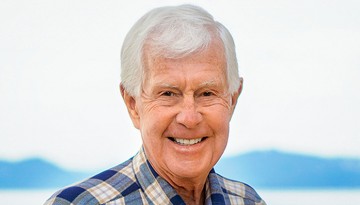
A $5 million gift from David A. Duffield ’62, MBA ’64, has established the Duffield Family Cornell Promise Scholarship, providing financial assistance to undergraduate engineering students in response to the COVID-19 pandemic.
In Nature Geoscience, Cornell’s Johannes Lehmann says that scientists should develop new models that accurately reflect soil carbon-storage processes to draw down atmospheric carbon dioxide.
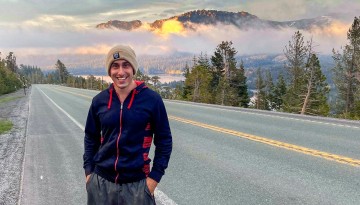
Zachary Prizant ’18, MPS ’19, and his identical twin brother, Maxwell, have faced wild stallions, rattlesnakes, desert heat and unforgiving stretches of highway as they cross the continental U.S. on foot and raise money for COVID-19 relief work.
A pilot program proposed by two Cornell Law School scholars seeks to attract highly skilled immigrants through a points-based selection process, a change they say would benefit the U.S. immigration system and the economy.
Freedom on the Move, a database documenting the lives of fugitives from American slavery through newspaper ads placed by slave owners, has received a $150,000 grant from The Andrew W. Mellon Foundation.
The Politics of Race, Immigration, Class and Ethnicity, a new initiative in the College of Arts and Sciences, will hold its first event, a webinar featuring discussion about the abolition of police, July 27 at 1 p.m.
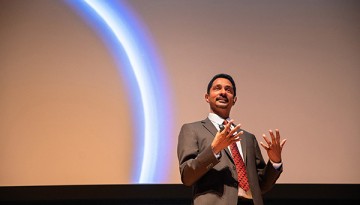
Ray Jayawardhana, the Harold Tanner Dean of Arts and Sciences and professor of astronomy, delivered a keynote address to approximately 1,000 K-12 teachers at the National Math and Science Initiative virtual conference.